September 9, 2021

How National School Prepared Me for College in My Passport Country

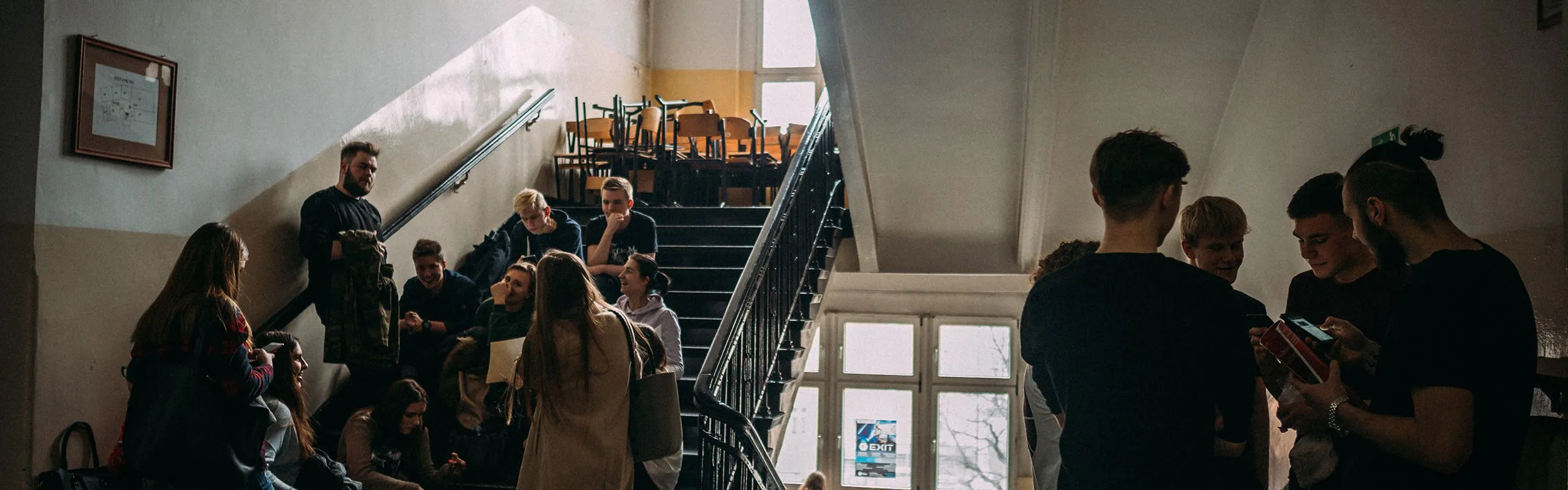
In May of 2013, I walked out of a very familiar gray building—my Czech high school—for the last time as a student. The relief of completing my final cumulative exams sunk in, and then a twinge of sadness washed over me as I realized that it wouldn’t be long now before I moved away from the place I called home. After growing up as a missionary kid in the Czech Republic my entire life, I was college-bound and moving to my “passport country.”

Before college, I had never experienced formal education in English, my mother tongue. As a Third Culture Kid (TCK), the longest continuous stretch I spent in the States was three months. I sometimes wondered if I was behind my American peers when it came to college preparation, considering the differences in language and education systems.

Many missionary kids (MKs) in Josiah Venture (JV) attend national schools here in Central and Eastern Europe. We learn all of our math, science, and grammar (among other subjects!) in our second languages, with a high focus on memorization over writing or creativity. Might these aspects of national schooling, among others, be a disadvantage to us in college?

Over the years, we’ve been surprised to find that most TCKs in JV—who go to national schools here in Central and Eastern Europe and then transition to college in North America—have thrived in their new academic settings. School in a second language can feel like a constant uphill battle. Yet, the Lord uses our experiences to prepare us, in unlikely ways, to navigate North American college academics.

Every JV Kid has a unique story of their education. Here are four valuable lessons God taught me throughout my own education story that helped equip me to transition from national school to college in my passport country.
Adapting when I felt uncomfortable

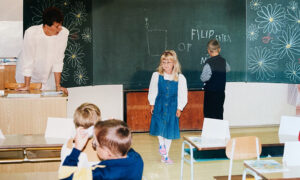
Czech school was all I knew before college, but it still managed to keep me on my toes constantly. I found myself guessing at how to respond to various cultural or academic situations. I didn’t always understand word problems in math class. I didn’t know what snacks I was supposed to bring on school trips (kids often brought potato salad and schnitzel sandwiches if anyone is wondering). When it came to Czech writing, my vocabulary never measured up. My only way to survive was by listening and observing, then adapting to any given situation.

I spent my first semester of college figuring out the system of syllabi, learning the correct way to use citations, and navigating group projects. Each professor had different expectations in class, so I had to listen closely. The experiences of adjusting to new and unfamiliar situations in Czech school made this transition feel more natural than I would have expected.

Receiving help and digging deeper to understand

My parents did their best to help me with my schoolwork, but we didn’t always understand the assignments or materials in our second language. Because of this, I had a Czech tutor from second grade through my senior year of high school. Having a tutor was a lifesaver. Sometimes I felt embarrassed telling my Czech classmates that I had a tutor because it highlighted that I was different and needed help. At some point, though, the Lord softened my heart. The support of this tutor made it possible for me to make it through schooling in my second language.

My tutor helped me study, understand homework questions, and practice my Czech grammar. However, his help had a far more significant impact on my life. He taught me a valuable skill — digging deeper to find answers to questions. My tutor had experience teaching history and Czech classes but was as confused as me about chemistry or biology. When I didn’t understand the material at school, we would spend an entire hour Googling explanations, comparing articles online with my textbooks, watching YouTube videos, and making sense of the subject matter. I learned to dig deeper to understand confusing concepts and words.

I needed all of these skills in college. There were plenty of times when I didn’t understand assignments or concepts in my college classes. So, I did what I always did in Czech school — I asked for help and dug deeper. My older brother coached me through research papers, and my professors were always willing to clarify assignments or questions I had after class. I discussed challenging concepts from classes with my friends. And, yes, sometimes a Google search helped clarify things as well.
Memorizing information (lots of it!)

Much of our national schooling system revolved around rote learning. This meant that I spent hours each week reading and re-reading my notes and textbooks to memorize dates, lists, and whole paragraphs of information. It was challenging in my second language, even though I spoke it fluently. While memorization is tedious, doing it often taught me how to approach memorization creatively. This skill came in handy in college while studying for exams.

Most of my college education relied on critical thinking and understanding concepts and ideas. However, even college courses sometimes involve memorization. If I had to memorize a list of definitions or theories, I would feel strangely excited. While it could take hours to write an essay during my freshman year of college, memorization was one thing that felt familiar and came naturally to me, thanks to the national school in Czech.

Relying on the Lord in my weakness

National schooling was hard. If you ask TCKs in JV what the most stressful part of life is, they will almost always tell you that it’s school. I felt this way throughout my childhood as well.

As a student, I didn’t always get a lot of heads up before our written and oral exams, so had to be prepared at all times. My parents prayed for me and with me for school since day one. The seemingly never-ending cycle of studying and exams caused a lot of stress in my life as a kid and teenager. That was tough. God showed his kindness in redeeming these difficult experiences by developing muscles in me that I ended up needing in college and even in life as an adult. I learned to run to the Lord when I felt pressure or anxiety. I knew I couldn’t handle everyday life on my own.

In the midst of national school, the Lord, in his grace, prepared me for college in many unexpected ways. And more importantly, I could see his mercy and compassion throughout the daily struggles of going to school in my second language. I am so thankful he walked with me every step of the way.

From One TCK to Another

While national school did prepare me for college in many ways, my parents also made some investments into our education that made a huge difference. I took an online English writing course for four years, read books in English at home, and had a tutor who helped me with Czech school. A foundation of English reading and writing was the most practical supplemental education I received. All together, these three supplements to my education gave me firm footing and much more confidence in preparation for college.

Written by Claire Patty
September 2021

Claire Rothe International Team

Related Posts

Read Story

Stories

A Thanksgiving Challenge and Promise

Philippians 4:4-7 states, “Rejoice in the Lord always; again I will say, rejoice. Let your reasonableness be known to everyone. The Lord is at hand; do not be anxious about anything, but in everything by prayer and supplication with thanksgiving let your requests be made known to God. And the peace of God, which surpasses all understanding, will guard your hearts and your minds in Christ Jesus.” Two things stand out to me from this verse: a challenge and a promise. The Challenge: Christians are commanded to not be anxious about anything. Instead, we are to be thankful. Paul wrote this letter as he was in prison, preparing for his martyrdom. He acknowledged that his entire ministry was in the Lord’s power and he had nothing to be anxious about. Furthermore, his friends were not supposed to be anxious either. Rather, they were to thank the Lord for his provision and truth. In this situation, Paul was not instructing his friends to deny that there was hardship. He admitted that there would be pain in the future. However, with that, the Church was to devote all troubles to the Lord. How would this play out in a modern Thanksgiving Day context? Jenny Llamas was born in the Czech Republic, so she did not grow up with Thanksgiving. Landen, her American husband, did and has had so much fun introducing the holiday to her. From American football to turkey trots to sweet potato casserole with marshmallows, Landen and Jenny love getting to spend Thanksgiving either with their family or at Josiah Venture’s conference center in Malenovice, Czech with Josiah Venture missionaries. One challenge for Jenny, though, has been when people are asked to share what they are thankful for. It’s not the mental search for thankfulness that’s difficult for Jenny. Instead, it’s all the other thoughts that come to her mind too. It’s “the hard things in my life that sometimes even seem louder than the things I’m thankful for,” Jenny said. During these times, she wants to find ways to process and acknowledge times of hardship while also remaining thankful. So, how does Jenny do that when she is reminded of hard times during Thanksgiving? How does she process both pain and thankfulness? Jenny’s favorite part of Thanksgiving is the meal preparation. She has her own quiet time in the kitchen. As she experiments with all sorts of traditional American recipes, she reflects on how God has worked in her life over the past year. She recalls the exciting times of blossoming relationships with friends and the painful memories of things uncertain and hurtful. It’s in these moments that Jenny brings everything to God, both the good and the bad. That’s where the promise of Philippians comes into play. The Promise: In response to giving thanks, the Lord will surround us with his peace. When we submit to the Lord in thanksgiving, he places a spiritual shield around our hearts and minds. He takes us out of a state of fear and provides us with the ability to give thanks in all circumstances. When the meal preparation is complete and Jenny steps out to celebrate with friends, she reminds herself that God wants her to have peace. God has given her a spiritual family with whom she can process heartache and pain. He also provides her with the time to journal, writing down her thoughts as a way of acknowledging hardship and giving it to the Lord. Then, he gives her rest. “I say a quick prayer to the God who sees me,” she said. “I give myself permission to rejoice in what God has done and … take a break from the hard things knowing that God sees them and he holds them.” This Thanksgiving, I invite you to recognize the trials in your life and give them over completely to God. Replace the state of anxiety with the action of thankfulness, preparing your heart for worship as we enter into this holiday season. “The Lord is at hand.” (Phil. 4:5b)

Read Story

Events, Stories

You’re Not Alone in the Battle

When you’re used to leading, serving, and pouring into others, what happens when you suddenly can’t? What happens when the person who normally encourages everyone else wakes up and realizes she has nothing left to give? That’s where I found myself last year. I’m naturally a driven person. I love to see progress—to watch people grow, ministries flourish, and God’s work move forward. But last year, right before a major conference I had been preparing for—a mental health summit for nearly 700 youth leaders and church leaders—everything stopped. I got sick, and my normal pace of life vanished overnight. Suddenly, I couldn’t do what I thought I had to do. At first, I tried to stay positive, to find purpose in the pause. I told myself God was teaching me patience, humility, or to delegate better. But underneath those thoughts, a more dangerous narrative started to form: “God is disappointed in you.” “You’re not strong enough.” “You’re failing as a leader.” “Maybe God is holding back because you don’t deserve his help.” Those are the kinds of lies that can take root quietly—and quickly. It’s the same old whisper the enemy used in the Garden: “Did God really say…?” (Genesis 3:1). The serpent’s goal was never just to tempt Eve; it was to make her question God’s heart. And he still uses that same strategy today. He wants us to believe that God is distant, that we’re alone, unseen, and unloved. I’ve seen this pattern not only in my life, but in the lives of so many young people and leaders I’ve walked with. The moment things get hard—disappointment, exhaustion, relational conflict, failure—the enemy twists the truth. He tells us we’re forgotten, that our prayers don’t matter, and that no one really understands. And slowly, we start to isolate ourselves. But isolation is one of his most effective weapons. Once we withdraw, our vision blurs. We stop hearing the truth clearly. We start interpreting everything through the lens of fear, shame, and self-pity. Even Scripture is full of people who felt this same ache. David cried, “Turn to me and be gracious to me, for I am lonely and afflicted” (Psalm 25:16). Elijah, after a great victory, ran into the wilderness and said, “I have had enough, Lord” (1 Kings 19:4). Job sat surrounded by friends who misunderstood him. And even Jesus—our Savior—experienced complete abandonment in Gethsemane and on the cross. Loneliness and lies are not new, but neither is God’s response to them. In my own season of weakness, when I couldn’t find the strength to pray, others prayed for me. When I felt unseen, people showed up with meals, with text messages, and with quiet presence. Even my unbelieving neighbors said, “We think someone up there cares about you.” That was God reminding me: You are not forgotten. You are not alone. The truth is, the Body of Christ was never meant to function in isolation. Strength in God’s kingdom doesn’t mean independence—it means connection. It means letting others carry you when you can’t walk and trusting that God is at work even when you can’t see progress. This experience also helped me recognize a pattern: the enemy always attacks identity and connection first. He wants to disconnect us from God’s truth and from God’s people. But the way we stand firm is by returning to both. When I start to spiral now—when I believe I have to prove my worth or carry everything alone—I stop and remind myself of what’s true. I reach out to trusted friends and ask for prayer. I ground myself in simple spiritual and physical practices that bring me back to reality: breathing deeply, reading a psalm, or stepping outside to notice beauty. These small moments become declarations of faith. Romans 11:33-36 says, “Oh, how great are God’s riches and wisdom and knowledge! How impossible it is for us to understand his decisions and his ways!” That verse anchors me. I don’t have to understand everything; I just have to trust the one who does. Maybe you’re in a similar place right now. Or maybe you’re walking with young people who feel lost, invisible, or stuck in lies about who they are. The battle is real, but so is our victory in Christ. So, here’s my invitation to you: Would you take a moment to pray—for yourself, for your friends, and for the next generation—that we would recognize the lies of isolation, stand firm in truth, and live connected as the Body of Christ? You’re not alone in the battle. And neither are they.

Read Story

Missionary Kids, Stories

Heroes of Faith

Dear Friends, Faith has an unexpected ripple effect. In October of 1955, a 27-year-old woman named Margaret Olsen boarded a Norwegian freighter bound for the Philippines. While a grad student at Bible college, she heard a young missionary named Dick speak about his ministry to the military. Over the next couple of years, she saw him again at a few conferences and was later invited to visit him, along with her mom, for a week as his ship was delayed. He was moving to Subic Bay, Philippines, to establish a ministry to U.S. sailors stationed there after the war. After this brief time together, they continued to communicate through letters, and then a tape came in the mail with a marriage proposal. After prayer and counsel, Margaret accepted, and now she was on her way to marry him. It was a huge step of faith. Her future husband was far away, and so much was unknown. Before leaving, she had managed to gather just $150 in monthly support and donations of supplies for the new servicemen’s center Dick had opened. Standing with her dad and nephew beside the ship, she clutched a portable Singer sewing machine that provided her passage. It was an unusual ticket, but the captain of the ship had agreed to take on one more passenger if she would work her way across the ocean, mending uniforms, bedding, and flags, washing dishes, and scrubbing floors. Before this bold change of direction, she worked a steady job as a registered nurse. But when she gave her life to Christ at the age of 12, Margaret decided that following Jesus wherever he led was worth more than safety, stability, or a career. Now she headed into challenge and uncertainty, anchored only by the promises of God. Two weeks after they were married, she was learning to cook as she fed 60 hungry Sailors who gathered in their home for food and Bible study. It was more difficult than she imagined, yet her steady faith enabled her to view the challenges of long hours of work, heat, and an unfamiliar culture through the lens of God’s sovereignty and loving care. Six years later, I was born in the Philippines, the second child of Dick and Margaret Patty. Throughout my early years as a child, I was surrounded by fruitful ministry to the military. Then, our family moved to Denver as my dad became the director of the mission. In each of these places, daily examples of a life of faith filled our home. Courage, trust, thankfulness, sacrifice, and investment in the lives of others were consistently demonstrated through small acts of kindness and large steps of obedience. A year ago this month, my mom graduated to Glory at the age of 96, preceded just three years earlier by my dad. As I reflect on her passing, I think of the 27-year-old holding a sewing machine as she boarded a ship, confident in the future because she trusted in Jesus. And I realize that Josiah Venture would not exist today if it were not for that young woman’s example of faith. Many of you are also quiet heroes. What unexpected impact is rippling out of your steps of faith? Grateful for each of you, Dave Patty President, Josiah Venture