October 24, 2025

You’re Not Alone in the Battle

When you’re used to leading, serving, and pouring into others, what happens when you suddenly can’t? What happens when the person who normally encourages everyone else wakes up and realizes she has nothing left to give?

That’s where I found myself last year.

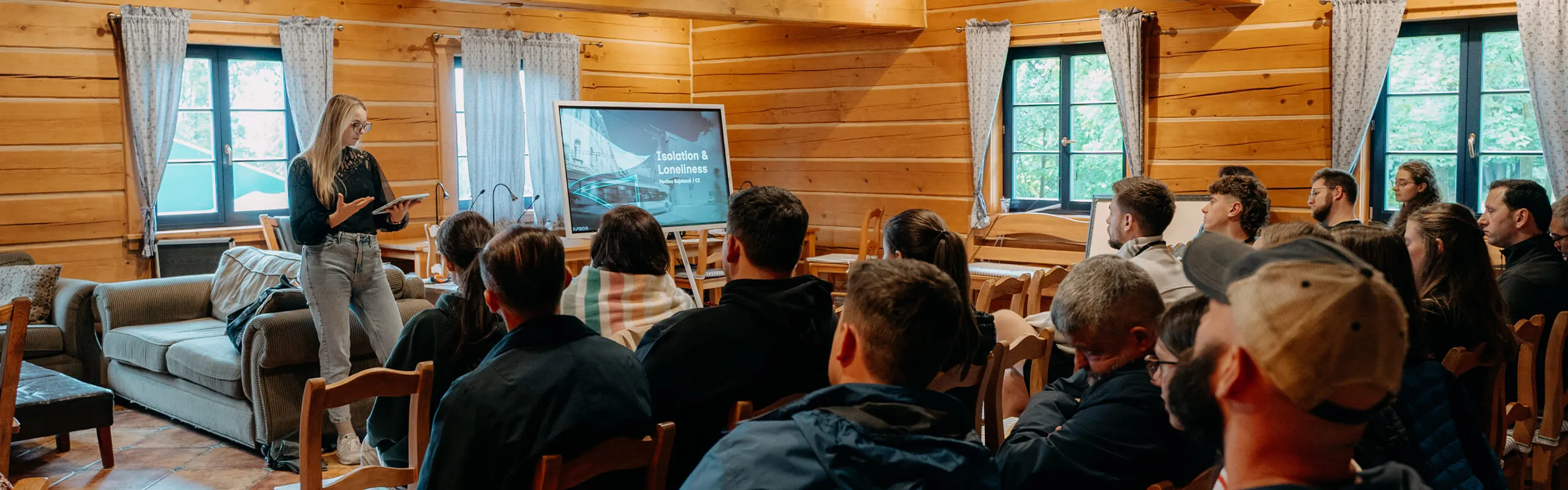
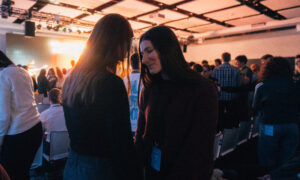
I’m naturally a driven person. I love to see progress—to watch people grow, ministries flourish, and God’s work move forward. But last year, right before a major conference I had been preparing for—a mental health summit for nearly 700 youth leaders and church leaders—everything stopped. I got sick, and my normal pace of life vanished overnight. Suddenly, I couldn’t do what I thought I had to do.
At first, I tried to stay positive, to find purpose in the pause. I told myself God was teaching me patience, humility, or to delegate better. But underneath those thoughts, a more dangerous narrative started to form: “God is disappointed in you.” “You’re not strong enough.” “You’re failing as a leader.” “Maybe God is holding back because you don’t deserve his help.”

Those are the kinds of lies that can take root quietly—and quickly.

It’s the same old whisper the enemy used in the Garden: “Did God really say…?” (Genesis 3:1). The serpent’s goal was never just to tempt Eve; it was to make her question God’s heart. And he still uses that same strategy today. He wants us to believe that God is distant, that we’re alone, unseen, and unloved.

I’ve seen this pattern not only in my life, but in the lives of so many young people and leaders I’ve walked with. The moment things get hard—disappointment, exhaustion, relational conflict, failure—the enemy twists the truth. He tells us we’re forgotten, that our prayers don’t matter, and that no one really understands.

And slowly, we start to isolate ourselves.

But isolation is one of his most effective weapons. Once we withdraw, our vision blurs. We stop hearing the truth clearly. We start interpreting everything through the lens of fear, shame, and self-pity.

Even Scripture is full of people who felt this same ache. David cried, “Turn to me and be gracious to me, for I am lonely and afflicted” (Psalm 25:16). Elijah, after a great victory, ran into the wilderness and said, “I have had enough, Lord” (1 Kings 19:4). Job sat surrounded by friends who misunderstood him. And even Jesus—our Savior—experienced complete abandonment in Gethsemane and on the cross.

Loneliness and lies are not new, but neither is God’s response to them.

In my own season of weakness, when I couldn’t find the strength to pray, others prayed for me. When I felt unseen, people showed up with meals, with text messages, and with quiet presence. Even my unbelieving neighbors said, “We think someone up there cares about you.” That was God reminding me: You are not forgotten. You are not alone.

The truth is, the Body of Christ was never meant to function in isolation. Strength in God’s kingdom doesn’t mean independence—it means connection. It means letting others carry you when you can’t walk and trusting that God is at work even when you can’t see progress.

This experience also helped me recognize a pattern: the enemy always attacks identity and connection first. He wants to disconnect us from God’s truth and from God’s people. But the way we stand firm is by returning to both.

When I start to spiral now—when I believe I have to prove my worth or carry everything alone—I stop and remind myself of what’s true. I reach out to trusted friends and ask for prayer. I ground myself in simple spiritual and physical practices that bring me back to reality: breathing deeply, reading a psalm, or stepping outside to notice beauty. These small moments become declarations of faith.
Romans 11:33-36 says, “Oh, how great are God’s riches and wisdom and knowledge! How impossible it is for us to understand his decisions and his ways!” That verse anchors me. I don’t have to understand everything; I just have to trust the one who does.

Maybe you’re in a similar place right now. Or maybe you’re walking with young people who feel lost, invisible, or stuck in lies about who they are. The battle is real, but so is our victory in Christ.

So, here’s my invitation to you:
Would you take a moment to pray—for yourself, for your friends, and for the next generation—that we would recognize the lies of isolation, stand firm in truth, and live connected as the Body of Christ?

You’re not alone in the battle. And neither are they.

Related Posts

Read Story

Events, News, Spotlight

Like Jesus

In a world of endless possibilities, how do you decide what is most important? The battle for your attention is relentless. Every day AI and social media invent more sophisticated methods of force-feeding you information. No wonder you and I feel overwhelmed, since experts tell us that over 90% of the data in the world was created in just the last two years! As the Josiah Venture team has been seeking God’s vision for the next four years, we have narrowed our gaze to ancient truths rather than chasing the latest trends. Our “2030 Vision” brings focused attention to just one priority in the sea of endless possibilities—the simple goal of becoming more like Jesus. Our “Like Jesus” vision has three specific objectives. How can we become more like Jesus in making disciples who make disciples? Paul expressed this priority in his letter to Timothy when he said, “and the things you have heard me say in the presence of many witnesses entrust to reliable people, who will also be qualified to teach others” (2 Tim 2:2). Timothy was an outstanding disciple of Christ, but Paul wanted him to go further and become a disciple-maker, who equipped others to do the same. Disciple-making moves from addition to multiplication when we can see it reaching the fourth generation, as reflected in Paul’s challenge to Timothy. Our first “Like Jesus” focus is to see this fourth-generation disciple-making taking place through all of the 375 members of the JV team. The second “Like Jesus” objective relates to the local youth ministries we are serving. Right now, the JV team is actively partnering with over 650 churches to build disciple-making youth ministries that reach the lost, build believers rooted in Christ, and equip young people to disciple their friends. We do this through training, coaching, events, and powerful outreach tools throughout 16 countries of Central and Eastern Europe. Our vision is to double this number by 2030, walking alongside 1300 churches to build disciplemaking youth ministries that reach many thousands with the gospel. With less than 1% evangelical believers in the countries we serve, we truly believe that reaching the next generation can spiritually transform this region of the world. Local churches are the key. Jesus promised to build his church and called the local church his body and his bride. Our third “Like Jesus” objective is to love the church like Jesus did and measure the outcome of our efforts by how we make his bride more radiant and fruitful. After a year of prayer, planning, and preparation, September marks the launch of our 2030 “Like Jesus” vision, which will focus our energy and direction in the months and years ahead. Thank you in advance for your part in making this vision a reality. Dave Patty President, Josiah Venture

Read Story

Discipleship, Internship, Stories

Trusting Outside the Box

This year, I had the privilege of going to two camps in Slovenia, one in Koper and one in Domžale. This is my second internship with Josiah Venture and my fourth year helping at camp, so I had a pretty good idea of what to expect. With English camps, there is a lot of planning involved, such as figuring out the evening, preparing themed parties, practicing the camp dance, organizing the games, and readying the overall camp program. What I did not expect was how my whole summer would be focused on trusting God outside the boxes I had put him in. Before the summer started, I prayed for the kids at camp to have open hearts and minds to think about Jesus in a different way. I wanted them to see Jesus the right way and not just because of what they had heard from others. What I didn’t realize is that the Lord was doing the same with my heart. Before I left for the summer, I really had a hard time trusting the Lord and his timing. Every rejection or “no” had felt like a slap in the face, not protection. I was trying to figure out what God was doing within the waiting. During camp, I realized God was calling me to step outside of the box and to trust him in the waiting, no matter the outcome or what my feelings told me. God’s character never changes, and none of the trials we go through are without purpose. One of the talks I heard this year at camp was about being willing to step outside of our box in faith. It takes faith to trust God when our situations or feelings tell us otherwise. Before, my feelings had told me that God was not kind because of all the rejection and the times I had felt left out in my life—that God did not see me. He forgot about me, because how is he kind by making me wait? That God must be mad, and now I’m struggling to wait and be patient for him. At camp, I realized that God doesn’t feel that way. God cares deeply about me, and there’s always a good reason that we have to wait. My mom always says that God is never early or late but always on time. We can trust that he knows what is good for us, but sometimes it doesn’t feel that way. Sometimes life hurts, and we can’t understand what God is doing within the hurt and chaos. Sometimes pain and hurt can give us a better perspective on a situation, or something we thought we wanted. This summer gave me a more realistic view of what ministry looks like in Slovenia: lonely, hard, discouraging at times, but so worth it. This internship showed me that sometimes thinking outside the box also means not being afraid to admit that missions aren’t for everyone, and it’s okay if that’s true for me. Not everyone is called to missions, and you don’t have to feel guilty that you aren’t. You just have to be faithful where God has placed you. Don’t let others make you feel guilty about your feelings or how you experience things; instead, take your feelings and experiences to God. One of my friends told me the most loving thing I could do for the church was to realize that God isn’t calling me to missions for longer than these four trips. Some opportunities are only for a season. There are people who keep serving in areas because they think they have to, but not because God has called them to, and they can hurt people. God has a purpose and a place for everyone. I’m so grateful I’ve had four summers to pour into students and to be used by God in Slovenia. I’m sad that this season has come to an end, but God has done so much not only in my heart but also in the hearts of Slovenes. So, how are you taking your experiences and feelings to God? Are you letting your feelings dictate God’s character, or are you telling your feelings who God is?

Read Story

Evangelism, Events, Help Ukraine

Dare

Who holds the future? As Josiah Venture works with local churches to help them reach the next generation, one very effective tool we offer is a program called Fusion. Teenagers love music and the arts, yet schools in our region don’t generally offer choir, drama, band, or other programs you may have participated in when you were young. This creates an opportunity for the church to gather unbelieving young people together into a Fusion community, which is a contemporary rock/gospel choir. In the context of weekly meetings, teens are shepherded toward faith in God, but we also found that large gatherings can strengthen the local outreach. So last month, 20 Fusion choirs from 10 countries joined for a unique festival called Fusiondary, where the choirs perform for each other, grow in their skills, and are challenged with the gospel. Out of the 500 participants, at least half were unbelievers. Several months before the festival, students filled out a survey about their needs and interests. Normally, classic teen issues like relationships and identity come to the top, but this time, the number one concern was the future. Surrounded by uncertainty, this “anxious generation” is fearful as they look ahead. In response to this, our team chose the theme— “Dare.” “Dare to take a step of faith and trust in Jesus.” “Dare to believe there is a God who holds the future.” One of our newest Fusions is in the city of Lviv, Ukraine, a country still in the grip of relentless war with neighboring Russia. For many of the students, traveling to the Czech Republic for Fusiondary was their first time out of the war-torn country. Yura, a 16-year-old, joined Fusion because of his love for music, and became their key drummer. Although he had heard the gospel many times, he was hesitant to give his life to Christ. On Saturday evening, Jenny used an unusual passage for her talk—the story of the nation of Israel dying from poison and needing to look to a snake on a stick to be healed. “Jesus was lifted up in the same way,” Jenny shared, “and we need to ‘dare’ to look to him in faith for healing that we can find nowhere else.” After the message, Timothy, one of the Ukrainian leaders, found Yuri and asked if he wanted to talk. “Why don’t we come to Jesus right now?” he said. “You know he is real, and then you can have a life with God.” Yuri shared that he wanted to wait, but then said, “What if I don’t live until the next camp? Life is not forever. You don’t know what life brings, and you don’t know when your life ends.” That night, Yuri “dared” to put his trust in Jesus. The next Sunday, he was giving testimony to his faith at his local church in Lviv. Many others made the same step of faith and discovered that, “Even if everyone leaves me, God loves me like I am and will never leave.” Thank you for “daring” with us to give this next generation hope for the future. Dave Patty President, Josiah Venture