

June 10, 2021

5 Ways to Care for Missionary Kids on Home Assignment

I remember the feeling like it was yesterday—rolling my tiny suitcase down the driveway, with butterflies in my stomach, eagerly anticipating the adventure that was ahead. It was an adventure that happened only every few years—home assignment. I grew up as a missionary kid (MK) in Czech my whole life, being the child of Josiah Venture missionaries. Czech was (and still is!) home to me. As a result, it always felt funny to me when we used the term “home” assignment to describe our trip to visit dear supporters, churches and family in my passport country. As a kid, I often used a much simpler term to describe our family’s home assignment: “Going to America”.

While home assignment often felt like an adventure, there were days when I felt alone, exhausted, confused, or like an outsider. Some days, I felt pressure to say the right thing and didn’t know how to answer questions I was asked. Those days were hard.

If you’ve ever wondered what you could do to help MKs feel more connected, welcomed, and loved when they “come to America” (or their passport country) for home assignment, thank you! Your care for us MKs along the way means more than you’ll ever know. Whether you’re meeting MKs for the first time or counting down the days until you can see them, I hope these tips bring fresh inspiration to caring for them while they’re on home assignment with their families.

1) Ask for parents’ insight about how to relate with their kids

Parents know their kids best! If you can, talk with the missionary parents before they come to church on Sunday, or before you meet up with them, and ask them how you can best support their kids while you are together.

Some kids genuinely enjoy standing with their parents at the missionary table and listening to the adults talk and have conversations (that was me as a kid!). Other kids love making new friends and want to jump into the Sunday morning kids’ programs, or play tag outside with the kids from church after the service. There are kids who enjoy the spotlight and get excited about singing a song in their second language in front of the church. Other kids would rather sink into the floor than have to say anything in front of people. They might prefer to blend in and make friends, or simply observe the world around them.

Ask parents about each of their kids specifically, since every kid has different needs. Then, see how you can help!

2) Introduce yourself like it’s the first time you’re meeting

I’m embarrassed to admit how many times I pretended to remember someone while visiting supporters with my family. One time, someone super kind warmly greeted me on a Sunday after church, and a full 5-minute conversation ensued. Upon them leaving, I quietly turned to my parents and said, “How do I know that person?” Not one of my proudest moments.

MKs often hear something like, “Hi, I’m Barbara, do you remember me? I used to babysit you!” or “Oh, it’s so good to see you! Wow, you’ve grown so tall!” While these are warm and well intentioned comments, this can put MKs in an awkward position. They may feel guilty for not remembering you, or they may want to act like they do indeed remember you (even if they don’t). If MKs are back in their passport country for the first time in three years, it may be really hard for them to recall a lot of names and faces from previous years. Help them out by introducing yourself!

If you introduce yourself in the same way you would if you were meeting for the first time, or if you remind them how you’re connected to their family, it will give them more freedom to be themselves. And, who knows, maybe one day they will actually say, “Oh yeah, I remember you!! You’re the one who picked us up from the airport a few years ago and told the story about the alligators!”
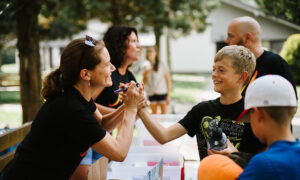
3) Ask specific, open-ended, simple questions (S.O.S. Questions!)

“Which country do you like living in better?” or “Do you have any friends there?” can feel like a lot of pressure for MKs. These are specific, yet very closed-ended questions. On the other hand, questions that are open but too broad or abstract can also feel intimidating. “How can we be praying for you?” or “What’s it like living in Hungary?” might be great questions for adults, but MKs are often at a loss for words to answer these questions on the spot.

One question MKs are frequently asked is, “Can you say something in (insert second language)?” This can be a surprisingly hard question to answer, even if they speak the language fluently! Try something more specific instead. Consider asking, “Can you teach me how to say ________ in (insert second language)?” For example, “Can you teach me how to say ‘you’re awesome’ in Polish?” or “Can you teach me how to say ‘I like eating potatoes’ in Croatian?” Making a small shift in the way you ask this common type of question that MKs get asked can not only relieve the pressure for them. It can also be a source of humor and connection as you attempt to remember the phrase and say it back to them. Bonus points for coming up to them randomly and saying the words when you see them again! That will often bring out a smile!

Here are some other tips on tweaking questions to help MK’s feel more loved…

  • Instead of, “Do you have friends there?” ask, “Who are some people you enjoy spending time with at home in Ukraine?” or “What’s something fun you’ve done with your friends in Slovenia?”
  • Instead of, “Which country do you like living in better?” ask, “What’s something you think is cool about Bulgaria?” or “What’s something you miss from America when you’re home in Czech?” You can flip this question around too, and ask, “What’s something you miss from Czech when you’re visiting America?”
  • Instead of, “How can I be praying for you?” (which can sometimes be a tough question for kids to answer!) you could ask, “What’s something kind of stressful or challenging that you’ve experienced in Slovakia recently?” Listen to their answers, and ask follow-up questions if they want to talk about it. After listening to their stories, you can say, “Wow, yeah, that does sound tough! I’d love to be praying for you for ________ .“ Here you could insert that area of their life—e.g. for new friends, for kind teachers, for school in their second language, etc.).

4) Invite them to join you in what you’re doing

If you’re welcoming MK’s into your home, share your hobbies and interests with them. I still remember the time one of our family’s supporters taught me how to knit. Knitting became my new favorite pastime on long car rides during that home assignment. I’m actually not much of a knitter today, but I still feel loved when I remember the woman who once took the time to teach me how to knit while we were in their home!

Think about some of the things you enjoy doing. Ask MKs if they’d like to join you and try something new. Do you make the best homemade kettle corn? Invite the kids to learn how to make it with you! Do you love building birdhouses? Do you play baseball in your free time? Let them paint a birdhouse you made, or coach them in pitching a baseball. You’ll not only teach them valuable skills, but they’ll feel so loved that you’d care enough to spend that time with them.

On Sundays, this may look a little different, but the same idea goes a long way. Are you teaching Sunday School? Ask them if they’d like to come with you and introduce them to other kids their age. Are you setting up chairs for the service? Invite them to join in and have a fun conversation as you go (and ask their parents first, of course!). Are you the same age as the MK? Invite them to play in the church gym with you and your friends after the service. You can even introduce them to other teenagers from the youth group and find out what you all have in common together.

5) Welcome them into the fold, rather than asking them to perform

In general, MKs long to belong wherever they go. They spend much of their lives observing and adapting to the world around them, and they are skilled at figuring out how to fit in. Give them the chance to feel at home in your church or community whenever they visit.

If you’d like for an MK to share something about life as a missionary kid in Sunday school or youth group, ask them beforehand.  Then, give them the chance to say “sure!” or “I’d rather not.”

In conversations, ask them about their lives in their countries, and be intentional about getting to know them for who they are. At the same time, give them space to belong and feel like they are welcomed to belong (and not stand out so much!), even if they’re only at church for a day or in town for a week. Treat them “as your own,” and remind them that they matter to you.

Thank you for investing in missionary kids! We are like sponges, constantly observing and taking in the world around us. When you spend time with us and take time to see our needs, it really means a lot. Your words of encouragement, and your actions of love and care, help us feel less alone, and point us to the kindness of God. Sometimes it’s the littlest things that make the biggest difference in our lives.

Written by Claire Patty

Claire Rothe International Team

Related Posts

Read Story

Missionary Kids, Stories

Heroes of Faith

Dear Friends, Faith has an unexpected ripple effect. In October of 1955, a 27-year-old woman named Margaret Olsen boarded a Norwegian freighter bound for the Philippines. While a grad student at Bible college, she heard a young missionary named Dick speak about his ministry to the military. Over the next couple of years, she saw him again at a few conferences and was later invited to visit him, along with her mom, for a week as his ship was delayed. He was moving to Subic Bay, Philippines, to establish a ministry to U.S. sailors stationed there after the war. After this brief time together, they continued to communicate through letters, and then a tape came in the mail with a marriage proposal. After prayer and counsel, Margaret accepted, and now she was on her way to marry him. It was a huge step of faith. Her future husband was far away, and so much was unknown. Before leaving, she had managed to gather just $150 in monthly support and donations of supplies for the new servicemen’s center Dick had opened. Standing with her dad and nephew beside the ship, she clutched a portable Singer sewing machine that provided her passage. It was an unusual ticket, but the captain of the ship had agreed to take on one more passenger if she would work her way across the ocean, mending uniforms, bedding, and flags, washing dishes, and scrubbing floors. Before this bold change of direction, she worked a steady job as a registered nurse. But when she gave her life to Christ at the age of 12, Margaret decided that following Jesus wherever he led was worth more than safety, stability, or a career. Now she headed into challenge and uncertainty, anchored only by the promises of God. Two weeks after they were married, she was learning to cook as she fed 60 hungry Sailors who gathered in their home for food and Bible study. It was more difficult than she imagined, yet her steady faith enabled her to view the challenges of long hours of work, heat, and an unfamiliar culture through the lens of God’s sovereignty and loving care. Six years later, I was born in the Philippines, the second child of Dick and Margaret Patty. Throughout my early years as a child, I was surrounded by fruitful ministry to the military. Then, our family moved to Denver as my dad became the director of the mission. In each of these places, daily examples of a life of faith filled our home. Courage, trust, thankfulness, sacrifice, and investment in the lives of others were consistently demonstrated through small acts of kindness and large steps of obedience. A year ago this month, my mom graduated to Glory at the age of 96, preceded just three years earlier by my dad. As I reflect on her passing, I think of the 27-year-old holding a sewing machine as she boarded a ship, confident in the future because she trusted in Jesus. And I realize that Josiah Venture would not exist today if it were not for that young woman’s example of faith. Many of you are also quiet heroes. What unexpected impact is rippling out of your steps of faith? Grateful for each of you, Dave Patty President, Josiah Venture

Read Story

Discipleship, Missionary Kids

Supporting Young TCKs in Transition

Transitions are often some of the most vulnerable times in our lives. This is especially true for young kids, who developmentally can’t yet imagine the future and what it could potentially look like. Change comes rushing in like a summer storm, having the potential of bringing with it either nourishment or chaos. How can we support young kids during transitions so that they are nourished by the rain, rather than left soaked and chilled? Tips and Resources collected by Claire Patty, Sarah Robertson, and Trisha Wynn. Focus: Ages 2-6  1) Support Healthy Attachment Focus on helping your kids feel “Safe, Seen, Soothed, Secure” – I recommend reading “The Power of Showing Up” by Siegel and Bryson – see “refrigerator sheet” about these four S’s here Incorporate more nurture into each day with your kids – hugs, closeness, snuggles, holding them, etc. Due to the regressive tendencies of kids in transition, they may at times need more “babying” during this time, and that is ok. The extra nurture will promote healthy coping and confidence. Give them a bracelet, draw a heart/smiley on their hand, etc., and tell them that it is a reminder that you are thinking of them and missing them as you’re both going about your day. Incorporate regular read-aloud time as a whole family (kids don’t have to be still for this either- they can paint, play with legos, do a puzzle, or draw while you read) 2) Create Stability/Structure with Playfulness Find routines that you can keep no matter what (a favorite stuffed animal goes with you in the car everywhere, you always have the same bedtime routine, etc.) Find ways to incorporate play into your daily routine – play is the way kids process their experiences and emotions, and also how they release stress. Get active, be silly, laugh, dance to music, play make-believe, etc. If you’d like to take this one step further, contact Claire to learn about non-directive play therapy. You can read about it here. Focus on the BIG play – running, wrestling with dad, sliding down the stairs on mattresses or pillows, big yoga balls, anything outside, trampoline, etc. – this is a way to get out not only energy but emotions too. 3) Talk About Expectations Give them real pictures of what the future could look like. One way you can do this is through “doll/stuffed animal role play”. With the help of stuffed animals, act out a future situation that your child is anxious about, e.g. the first day of a new school. Start by naming the stuffed animal after your child – they’ll think this is silly! Walk through the event moment by moment and include details that will definitely happen (e.g.”Hannah” walks into the coat room, takes off her shoes, hugs mommy, and walks into her classroom”). Make it realistic, but also fun and playful. End the story with the reunion of the child with her mommy or daddy. Try keeping a family calendar. A wall calendar is best—something that the kids can see on the wall, even if they can’t read it yet. Talk through it once a week or every day, so that kids know how many days it’s going to be until something happens. If you’d like to, you can also put stickers on this calendar or draw pictures that represent different things, e.g. a sticker for “visitors”, a sticker for “travel”, a sticker for “going to the park”. 4) Practice Empathy and Forgiveness Look into your child’s eyes and notice their body language for clues to what emotions they could be experiencing. After you’ve noticed what your child might be feeling, put the feeling word into a short response, generally beginning with “you,” (“you seem sad,” or “you’re really mad at me right now”). This empathy, along with a soft tone of voice, will help them feel seen and often calms their minds, so that you can then talk together about what’s going on under the surface. When our kids come home from preschool or any time that we as parents were not with them, it can help to consider what they experienced when they were away from us. Did they feel out of control? Were others unkind to them? Were they told “no” most of the time? Did they not understand the language spoken throughout the day? Did they miss us and now need our attention? Sometimes their emotions, impulsive behavior, or disobedience can be influenced by what happened during their day. Considering this can help us respond with compassion and gentleness. Make it a common practice to say “I’m sorry” and ask for forgiveness from your kids,  especially during a time of transition. Acknowledge the “yuck” with them, especially if we, as parents, are creating the source of yuck due to our own stress. Give them 30-second bursts of your undivided attention. If you are on a call, say, “Can you hang on for 30 seconds? I’ll be right back.” Put the phone aside, bend down, and give your child undivided, focused attention for 30 seconds; then say, “I have to finish talking to ______.” Stand back up and continue talking with your friend. (Resources from Sue C. Bratton, Garry L. Landreth, Theresa Kellam, and Sandra R. Blackard.) 5) Process Emotions and Experiences Together One way to process emotions is to have a family tradition at the dinner table to share “highs and lows” of the day. A song would help younger kids! See here for a great song to sing for processing the highs and lows of the day. Have a story time each day – at dinner or bedtime, ask questions such as: what did you do today that was new? What was stressful? What was funny? What are you thankful for today? How did you feel when that happened? Who was kind to you today? Etc. Talk about emotions each day – you can use emotions charts like these ones: – boys’ emotions chart or girls’ emotions chart. (Laminate it, and you can use the same one over and over again.) 6) Give Your Kids Opportunities to Develop Agency  Agency is the ability for kids to make choices and decisions that influence their surroundings and events. It is the ability to act and see the influence of those choices on the world around them—the capacity to act. TCKs spend a lot of their lives adapting to what is happening to them. This can become a strength, but it can also cause them to feel like victims of their circumstances. Whenever it’s wise and safe, give your kids a choice—this promotes their sense of self, their confidence, and, ultimately, their agency and resilience. Below are two examples of how you can encourage agency. In both examples, the word “choose” is important for the kids to hear:  Giving a choice to obey or to experience consequences – you can choose to clean up your toys now (obedience) or you can choose to have these toys taken away for the day (consequence). Another example: Sam, I see you’re sad that we have to leave the park. Staying at the park longer isn’t one of the choices right now. You can choose to go down the slide one last time at the park before we leave (or any other option you feel comfortable with, e.g. you can choose to walk to the car, etc.) or you can choose for me to carry you to the car. Which do you choose?” (Pause—Sam says nothing.) “If you choose not to choose, you’re choosing for me to choose for you.” (Pause. Sam is quiet.) “I can tell that was a hard decision—I see you’ve chosen for me to choose for you.” (Example adapted from Sue C. Bratton, Garry L. Landreth, Theresa Kellam, and Sandra R. Blackard.) Giving choice for what to participate in – “You can choose—Daddy is going to the store, and I am going to stay home and talk with our new friend Sara. Would you like to go with Daddy or stay home with me?”, or “We can go to the playground and play with some new friends from church or we can go to the playground and you don’t need to talk to anyone new. What would you like to choose?” 7) Take Care of Yourself and Pray! Probably the biggest influencing factor on kids’ stress levels is their parents’ stress levels. Transition is a big deal. Be gentle with yourself! Take prayer walks to refresh your soul, make time for extra sleep, get some alone time here and there, eat meals with lots of fruits, vegetables, and proteins, and take a generally slower pace for the early days or months of transition. If you are calm and relaxed, that will make a big difference for your little kids. Bring your own worries and fears to the Lord in prayer, and invite your kids to join you in honesty before God. You can even pray something like this, “Father, I get scared sometimes too about all the things that are new right now. I thank you that you see us, and you are close.” Extra tips from Trisha Wynn: From my experience, Mondays (or any day back to routine after a conference or retreat or weekend) were extra hard on the kids. Our kids would have their biggest rebellions and total meltdowns going into their preschool on Mondays, right after we had been away from home, or when we had been out of our routine. It was helpful when I finally realized that it took them a few days (not just an afternoon or one day) to “recover” from a retreat or even a vacation. Also, after a home assignment or a conference, there would be sleep regression or potty training regression. You have to give them and yourself a boatload of grace and remember that it will get better!! I was taking my kids to cafes before they could walk, and it’s still a thing for us. It’s one-on-one time, and it’s a place where they are guaranteed a “special” treat. We found the one place in town that had “American” donuts, cake pops, fancy hot chocolate, or even a Coke because we rarely have that at home. So maybe putting a name to that special time makes it stand out for the kids too. We called it “Dude and Dad time” for years when my husband would take our son out. Nowadays I say, “Let’s go on a date!” That equals a special food treat and playing cards at a coffee shop with me. That helps us stay connected and close, in the middle of whatever is going on. Some kids’ books that might be helpful: TCKs: “Swirly” by Sara Saunders “I Know Here” and “From There to Here” by Laurel Croza “A Fish Out of Water” by Hannah Flatman Emotions: “The Color Monster” by Anna Llenas “The Rabbit Listened” by Cori Doerrfeld “Ruby’s Worry” by Percival Rom “My Monster and Me” by Nadiya Hussain Supporting TCKs during the transition of Home Assignment: “Five Ways to Care for Missionary Kids on Home Assignment” by Claire Rothe

Read Story

Missionary Kids

Third Culture Kids in Europe

Do you know what a Third Culture Kid (TCK) is? Episode 10 of the “Josiah Venture Stories” podcast with Claire Patty is ready for you to listen to. She grew up in the Czech Republic with her family as a TCK. From a young age, she was impacted by being raised in a cross-cultural setting and seeing the gospel transform lives.⁠ After graduating from Czech national school, she moved to Chicago to begin her studies in Children’s Ministry at Moody Bible Institute. During her years at Moody, God placed a passion in her heart for TCKs. Claire now serves on the Josiah Venture International team as the Josiah Venture Kids (JVK) Director.⁠ In this episode, you will hear all about her experience as a JVK/TCK. She will also be sharing with us what it means to be a TCK, some of the common phrases that she hears JVK say, and some amazing resources. You can listen to the full podcast episode below, or by clicking this link. Below we’ve also included written excerpts from the podcast, along with a list of some of Claire’s favorite TCK resources that she mentions in the podcast. “So, Claire, how would you define a Third Culture Kid?” A TCK is someone who has spent a significant part of their developmental years outside of their parents’ culture. The term “Third Culture Kid” was first coined in the 1950s by Ruth Useem, but Van Reken and Pollock really established the term in their book “Third Culture Kids: Growing Up Among Worlds.” In this book, they said that “the TCK builds relationships to all of the cultures without having full ownership of any.” No matter how many cultures you grow up in, you’re still a third culture kid, not a “fourth”, “fifth” or “sixth” culture kid. TCKs take pieces from all of the cultures they grow up in. Because they are still in their developmental years, these cultures shape who they become—how they think, what they believe, and what they value. The challenge is that they don’t feel they truly belong in any of these cultures. The blessing is that they get to have cross-cultural experiences that form who they are. Another helpful category to think about when understanding TCKs is to compare their experiences to those of “Cross Cultural Kids” (CCKs). A CCK is someone who grows up influenced by two or more cultural environments. For example, a CCK could be a child who grows up in a bilingual home and visits grandparents in another country every year, or someone who immigrates with their family due to economic or political reasons. “Is there a difference between Third Culture Kids (TCKs) and Cross-Cultural Kids (CCKs)?” One of the things that distinguishes TCKs from CCKs is something called an “expectation of repatriation.” This means that a TCK expects that one day, for one reason or another, they will probably move back to their passport culture. A CCK’s experience of “home,” belonging, language acquisition, and grief and loss may still be deeply impacted by their cross-cultural life;  yet, they will experience these cultures differently than the TCK who often maintains one foot in one world and one in another. The TCK typically expects to move one day and return to their passport country. This move sometimes happens by choice, but often happens due to a change in their parents’ jobs. A TCK’s whole life can be upended by this job change. Another difference between TCKs and CCKs is that TCKs have affiliation and/or loyalty to an organization or subculture, such as the military, government, missions organization, or business. These subcultures add to the identity formation of the TCK, both in positive and negative ways. For me personally, I remember the day that I packed up all of my suitcases and was ready to leave for college. I remember praying and saying goodbye to the Czech lands. It felt like losing my home. I was being sent into a new season and I needed to be open handed about what would come after that, no matter what country it would bring me to. All I knew was the next step of moving to the United States. “How important is identity to a TCK? Can you talk about that a little bit?” Identity and belonging are two of the biggest struggles for TCKs. Knowing who they are as TCKs helps them realize that their experiences aren’t isolating, and they’re not alone. However, knowing their TCK identity is only one sliver of who they are. We talk with our JV Kids about belonging to God’s family and God’s greater story, and the eternal home we have with Christ. They find comfort in this from a young age. It’s a very tangible truth for them. It matters to them, because they are missing that feeling of acceptance and belonging in the world, so they find that uniquely in God’s Kingdom. “Do you have a hard time saying goodbye as a TCK?” Yep… it’s one of the vulnerable spots in my heart. I feel the pang every time someone leaves or I leave. There is sadness and grieving on both sides. Grief, loss, and goodbyes are all very intertwined with the TCK story. “What was friendship like for you as a TCK?” Friendships are very connected with loss and grief for TCKs. They say many hellos and goodbyes throughout their childhood. There were quite a few JV Kids who came and went, and that was hard. Friendships for Czechs tend to be more stable. Once you are friends with a Czech, you are typically friends for life. A lot of my classmates had two or three close friends, and that was it. I came into my school as a second grader, and most of my classmates had already known each other since kindergarten. Their friendships were already established, and there wasn’t space for me. I went through my whole elementary school and middle-school years changing friends every year, which was unusual because it wasn’t true for the others in my class. Someone would be friends with me for one year, but then not care about our friendship the next year, since they had other friends. That was tough. Stable friendships are like anchors for TCKs. A lot of JV Kids say their friendships with other JV Kids feel different, because they don’t have to explain themselves and they can instantly connect. When I went to college in the States, I was surprised to find that there were so many people I had commonalities with. Some of them weren’t TCKs, didn’t have cross-cultural experiences, or hadn’t been out of the country, but there were other connection points that were valuable. That is important for us TCKs to realize—that even with our unique backgrounds, there are connection points with people, especially in the body of Christ. Even practically, I had a friend in college who had moved often, so she understood what it was like to say goodbyes. I had another friend who grew up in a small town, so she spent her childhood exploring forests, just like me. My encouragement to adult TCKs would be to seek out connections with people who may look like they are different from you. You may be surprised that you have more in common than you think. “What are some stereotypes that people have of TCKs?” One of the stereotypes is that they are rootless and that they float between worlds and communities, not building close ties with anyone. There is also the stereotype of TCKs building relationships far too quickly, going deep way too fast. There is a group of TCKs who goes straight to the deep things when they first meet you. They may recognize that they don’t have a lot of time for building relationships, so they will try to build them as fast as possible in order to have at least some relationships. So, there are those two sides to things. Stereotypes for MKs are a whole other category. They often get stereotyped as being socially awkward. From our experiences with JV Kids, we have actually seen that they are very socially competent, remarkably so. “What are common phrases you hear JV Kids saying?” Most of the JV Kids go to national schools, so one of the most common phrases we hear them say is this: “Yes, [national] school is so hard, but it’s so worth it.” Most of the JV Kids today would say that school is the hardest thing in life for them. The system does prepare us well academically in most areas, but the emotional challenges of national school can be intense. Personally, I don’t know how I would have even gotten through national school without a native speaker’s help. I had a tutor for Czech school from second grade until I graduated from high-school. In the midst of this stress, the JV Kids often see their experiences in national school as “worth it.” They see school as an opportunity to build local friendships and develop a sense of deeper belonging in their country. They also see the spiritual aspect of this and value how they learned to depend on God through their challenging schooling experience. Still, it’s pretty challenging for them! “What book recommendations would you give to parents or kids … or anyone interested in TCKs?” If you are interested in resources about TCKs, thank you! They are a culture of their own. It means a lot to us when you take the time to try to understand how we process the world, because this can even be confusing to us! If you pull out one of these books or resources below, feel free to show them to TCKs, because it will mean a lot to them that you care. Here are some of my favorite resources: “Third Culture Kids: Growing Up Among Worlds” by David Pollock and Ruth Van Reken Instagram accounts – search for Third Culture Kids, for example, @tckglobal “Raising Up a Generation of Healthy Third Culture Kids” by Lauren Wells “Swirly” by Sara Saunders (A Children’s Book) “I Am Third, Volume II: Josiah Venture Kids and Their Journeys” by JV Kids “JV Third Culture Kids Deep Dive” qualitative research project (2019)