
December 22, 2016

A European Christmas

’Tis that joyous, festive season once again.

If I were celebrating with my family back in the States this year, and I’m guessing for many of you reading this, December brings with it cheesy made-for-tv movies, peppermint mochas, and stockings hung by the fire. However, as I spend my first Christmas as a full-time JV staff member in the Czech Republic, I can’t help but notice things are a bit different here. According to my national friends, the common movies to watch these snowy days are Czech fairytales, but I can’t understand them yet. For many, the holiday drink of choice is svařák, a mulled wine Czechs often drink on cold days. And stockings are not a part of most Christmas decor, but the European streets do look magical with their classy twinkle lights and holiday signs.

Although there are certain pieces of home I definitely miss, here are a few of the common European Christmas traditions I’m enjoying taking part in as a missionary on this side of the ocean.

Christmas Markets
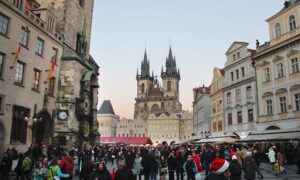
Prague Christmas Markets


Ask any of our JV staff members what they look forward to in the winter here and probably one of the first things they’ll say is walking around the Christmas markets. Whether in a cozy village like mine or a big city like Prague, you normally only have to go as far as your nearest square to visit stalls set up to sell roasted nuts, hot drinks, and local hand-crafted products perfect for gifts. There is often a big Christmas tree decorated as well and plenty of live music and lights.

Kyle Evans, director of the JV communications team and who is also new to the country, says his family is even making it an official tradition to explore a new market each year. “This Friday, we’re going to hop on a train and head west to the city of Olomouc, Czech Republic for a fun day-trip to see all the Christmas festivities. We can’t wait!”

Christmas Concerts
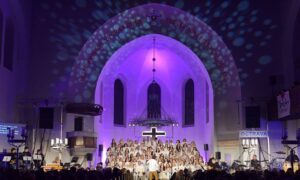
Christmas Concert in Church Ostrava

Photo by: Martin Popelar

Another fun thing many JV staff members are involved in over the holidays is Christmas concerts. A lot of the local Fusion choirs, from JV’s evangelistic music and performing arts ministry, have events where the youth sing carols and showcase what they’ve been up to throughout the fall. I went to the one my church held this season which was packed full of people and cheer.

Plenty of other concerts, open to the public, and not directly connected to our JV ministry also take place. For example, a couple weekends ago in Ostrava, for the fourth year, a group of over a hundred members formed the choir and band for Ostrava Zpívá (Sings) Gospel. All 1,650 tickets to their shows were sold and many other people watched the live streaming of the concerts on Facebook.

Terry English, JV Fusion director and choir conductor at the event, says, “Before Christmas there are many Advent concerts, but most of them are commercial events where there is no chance the audience will hear the gospel message, or church events that an unbeliever would be unlikely to attend. We wanted to create an event that would be visible in our city where Czechs would be challenged with the gospel message.”

Zuzana Nelson, another JV staff member who has sung in the choir since its beginning, describes the experience, “There’s something magical about this project –people come from different places socially, culturally, spiritually and together create something amazing.”

I agree that it was pretty amazing to watch when I was there a couple Saturdays ago. As the group sang and celebrated with so much energy for two hours straight, I couldn’t help but be overwhelmed by the message of hope and joy that they sang about. Pray with us that the truths many heard at these events, some for the first time, would resonate with them this Christmas and bring the real reason for the season into focus.

Christmas Meaning

One other thing I’ve really appreciated about how Czechs celebrate Christmas is that they keep Santa Claus separate from Jesus’ birth. Instead of Santa bringing presents to children on Christmas eve, Mikuláš (St. Nicholas) along with an angel and devil, meant to help discern whether a kid has been good or bad, come on December 5th and give small gifts to well-behaved little ones. You can see people dressed up as them at malls and schools and sometimes, if you’re lucky, you can even watch them ride around town in a horse-drawn carriage like I did at the beginning of this month.

After that though, the Christmas season is more about spending time with family, eating delicious food (That is, if you think the carp swimming around in your bathtub the week before Christmas will satisfy your tastebuds on the special day. My mouth is still waiting to make a final verdict.), and the birth of Jesus. On Christmas Eve, the story is that baby Jesus is the one who brings the gifts, not that old jolly guy with his reindeer.

I find it interesting that in what is now one of the most atheistic countries in the world, this tradition would have stuck around through the years. Many people may not realize that the greatest Christmas present ever wasn’t just brought by Jesus, but was Christ Himself. It is my prayer that in this part of the world, as people write letters to Jesus in the markets, and sing praises to Him at concerts, and open presents on the 24th, that they would know His love for them that was long ago packaged in swaddling clothes, resting in a manger.

This year for Christmas, I’m experiencing plenty of newness here in Europe. I’m thankful though for the different traditions that are reminding me once again of why I like this time of year in the first place. God put on flesh and made His dwelling among us; may we all be filled with great joy at this good news.

Wishing you a very, merry Christmas and a happy New Year from over here. As you celebrate, please pray with us that this winter season would bring with it many opportunities to share Christ and the reason we celebrate Christmas with people who don’t yet know.

Amy Nickerson

Related Posts

Read Story

Stories

A Thanksgiving Challenge and Promise

Philippians 4:4-7 states, “Rejoice in the Lord always; again I will say, rejoice. Let your reasonableness be known to everyone. The Lord is at hand; do not be anxious about anything, but in everything by prayer and supplication with thanksgiving let your requests be made known to God. And the peace of God, which surpasses all understanding, will guard your hearts and your minds in Christ Jesus.” Two things stand out to me from this verse: a challenge and a promise. The Challenge: Christians are commanded to not be anxious about anything. Instead, we are to be thankful. Paul wrote this letter as he was in prison, preparing for his martyrdom. He acknowledged that his entire ministry was in the Lord’s power and he had nothing to be anxious about. Furthermore, his friends were not supposed to be anxious either. Rather, they were to thank the Lord for his provision and truth. In this situation, Paul was not instructing his friends to deny that there was hardship. He admitted that there would be pain in the future. However, with that, the Church was to devote all troubles to the Lord. How would this play out in a modern Thanksgiving Day context? Jenny Llamas was born in the Czech Republic, so she did not grow up with Thanksgiving. Landen, her American husband, did and has had so much fun introducing the holiday to her. From American football to turkey trots to sweet potato casserole with marshmallows, Landen and Jenny love getting to spend Thanksgiving either with their family or at Josiah Venture’s conference center in Malenovice, Czech with Josiah Venture missionaries. One challenge for Jenny, though, has been when people are asked to share what they are thankful for. It’s not the mental search for thankfulness that’s difficult for Jenny. Instead, it’s all the other thoughts that come to her mind too. It’s “the hard things in my life that sometimes even seem louder than the things I’m thankful for,” Jenny said. During these times, she wants to find ways to process and acknowledge times of hardship while also remaining thankful. So, how does Jenny do that when she is reminded of hard times during Thanksgiving? How does she process both pain and thankfulness? Jenny’s favorite part of Thanksgiving is the meal preparation. She has her own quiet time in the kitchen. As she experiments with all sorts of traditional American recipes, she reflects on how God has worked in her life over the past year. She recalls the exciting times of blossoming relationships with friends and the painful memories of things uncertain and hurtful. It’s in these moments that Jenny brings everything to God, both the good and the bad. That’s where the promise of Philippians comes into play. The Promise: In response to giving thanks, the Lord will surround us with his peace. When we submit to the Lord in thanksgiving, he places a spiritual shield around our hearts and minds. He takes us out of a state of fear and provides us with the ability to give thanks in all circumstances. When the meal preparation is complete and Jenny steps out to celebrate with friends, she reminds herself that God wants her to have peace. God has given her a spiritual family with whom she can process heartache and pain. He also provides her with the time to journal, writing down her thoughts as a way of acknowledging hardship and giving it to the Lord. Then, he gives her rest. “I say a quick prayer to the God who sees me,” she said. “I give myself permission to rejoice in what God has done and … take a break from the hard things knowing that God sees them and he holds them.” This Thanksgiving, I invite you to recognize the trials in your life and give them over completely to God. Replace the state of anxiety with the action of thankfulness, preparing your heart for worship as we enter into this holiday season. “The Lord is at hand.” (Phil. 4:5b)

Read Story

Events, Stories

You’re Not Alone in the Battle

When you’re used to leading, serving, and pouring into others, what happens when you suddenly can’t? What happens when the person who normally encourages everyone else wakes up and realizes she has nothing left to give? That’s where I found myself last year. I’m naturally a driven person. I love to see progress—to watch people grow, ministries flourish, and God’s work move forward. But last year, right before a major conference I had been preparing for—a mental health summit for nearly 700 youth leaders and church leaders—everything stopped. I got sick, and my normal pace of life vanished overnight. Suddenly, I couldn’t do what I thought I had to do. At first, I tried to stay positive, to find purpose in the pause. I told myself God was teaching me patience, humility, or to delegate better. But underneath those thoughts, a more dangerous narrative started to form: “God is disappointed in you.” “You’re not strong enough.” “You’re failing as a leader.” “Maybe God is holding back because you don’t deserve his help.” Those are the kinds of lies that can take root quietly—and quickly. It’s the same old whisper the enemy used in the Garden: “Did God really say…?” (Genesis 3:1). The serpent’s goal was never just to tempt Eve; it was to make her question God’s heart. And he still uses that same strategy today. He wants us to believe that God is distant, that we’re alone, unseen, and unloved. I’ve seen this pattern not only in my life, but in the lives of so many young people and leaders I’ve walked with. The moment things get hard—disappointment, exhaustion, relational conflict, failure—the enemy twists the truth. He tells us we’re forgotten, that our prayers don’t matter, and that no one really understands. And slowly, we start to isolate ourselves. But isolation is one of his most effective weapons. Once we withdraw, our vision blurs. We stop hearing the truth clearly. We start interpreting everything through the lens of fear, shame, and self-pity. Even Scripture is full of people who felt this same ache. David cried, “Turn to me and be gracious to me, for I am lonely and afflicted” (Psalm 25:16). Elijah, after a great victory, ran into the wilderness and said, “I have had enough, Lord” (1 Kings 19:4). Job sat surrounded by friends who misunderstood him. And even Jesus—our Savior—experienced complete abandonment in Gethsemane and on the cross. Loneliness and lies are not new, but neither is God’s response to them. In my own season of weakness, when I couldn’t find the strength to pray, others prayed for me. When I felt unseen, people showed up with meals, with text messages, and with quiet presence. Even my unbelieving neighbors said, “We think someone up there cares about you.” That was God reminding me: You are not forgotten. You are not alone. The truth is, the Body of Christ was never meant to function in isolation. Strength in God’s kingdom doesn’t mean independence—it means connection. It means letting others carry you when you can’t walk and trusting that God is at work even when you can’t see progress. This experience also helped me recognize a pattern: the enemy always attacks identity and connection first. He wants to disconnect us from God’s truth and from God’s people. But the way we stand firm is by returning to both. When I start to spiral now—when I believe I have to prove my worth or carry everything alone—I stop and remind myself of what’s true. I reach out to trusted friends and ask for prayer. I ground myself in simple spiritual and physical practices that bring me back to reality: breathing deeply, reading a psalm, or stepping outside to notice beauty. These small moments become declarations of faith. Romans 11:33-36 says, “Oh, how great are God’s riches and wisdom and knowledge! How impossible it is for us to understand his decisions and his ways!” That verse anchors me. I don’t have to understand everything; I just have to trust the one who does. Maybe you’re in a similar place right now. Or maybe you’re walking with young people who feel lost, invisible, or stuck in lies about who they are. The battle is real, but so is our victory in Christ. So, here’s my invitation to you: Would you take a moment to pray—for yourself, for your friends, and for the next generation—that we would recognize the lies of isolation, stand firm in truth, and live connected as the Body of Christ? You’re not alone in the battle. And neither are they.

Read Story

Events

The Battle behind the Battle

We are not living in stable times. A short glance at the daily news can quickly ruin your day. Difficult wars in Ukraine and Gaza seem to defy solutions; assassinations and unrest in the United States tear at the fabric of society. Financial instability, polarizing debates in politics, and deep tensions between powerful nations make the future uncertain. I’m sure each of us could add a list of challenges even closer to home, in our work, with family, or at church. In light of these tenacious conflicts, the words of Paul in Ephesians seem out of place. “For we do not wrestle against flesh and blood…” Each of the battles I mentioned involves people with flesh and blood, and visible attacks that have real physical consequences. What does he mean when he says, “we do not”? Paul continues his argument with these words: “…but against the rulers, against the authorities, against the cosmic powers over this present darkness, against the spiritual forces of evil in the heavenly places.” Here is the truth he wants us to understand. Paul points us to an unseen world that is more significant than the one we see. Spiritual beings and forces of darkness are actively working to thwart the purposes of God. There is a “battle behind the battle”— a fight that has more profound and more eternal consequences than any political conflict. We are called to enter this struggle with the armor of God, “that you may be able to withstand in the evil day, and having done all, to stand firm.” Last month, we gathered 370 of our team and close partners from 22 nations at our training center in Malenovice, Czech Republic, for four days of being equipped for this very fight. Our theme was “Victorious – Equipped for the Battle, Anchored in Christ.” We focused on three main skills of an effective warrior: “See the unseen world, Stand in the authority of Christ, and Fight with weapons of power.” No matter how confusing and discouraging the visible battle may be, we know that Jesus is always more powerful than the forces of darkness, and he can accomplish his purposes even in the most difficult of times. In fact, he often turns what the enemy meant for evil into good if we submit to his will and stay obedient to his call. As I stood worshiping in a tent full of gifted young leaders, all contending in faith for the next generation, my heart was filled with gratitude for God’s movement here in Central and Eastern Europe. Thousands have put their faith in Christ because of their bold witness, and churches are being renewed all across the region through the leaders they equip. The daily news is still very confusing. But the spiritual news is that the Lamb has conquered, and the Lion of Judah is on the move. Thanks for joining us in the fight, Dave Patty President, Josiah Venture