January 9, 2020

Singing the Gospel

Dear Friends,

Music can open surprising doors for the gospel.

Terry English is one of JV’s gifted ministry entrepreneurs. Ten years ago he developed our Fusion ministry with a goal to see churches use rock/gospel choirs as a means to reach young people. Now, there are 38 Fusion choirs in local churches across nine countries, impacting over 1,400 young people—most of whom had no previous contact with believers.

Several years later, as he was praying for Ostrava—the third-largest metropolitan area of the Czech Republic, where he lives—Terry wondered if the same concept could be applied to reaching adults in his city. In spite of the fact that 330,000 people live there, only 800 are part of an evangelical church. Yet, even non-believers love to sing, and Christmas is a natural time to share the good news.
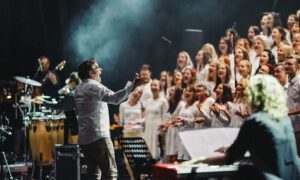
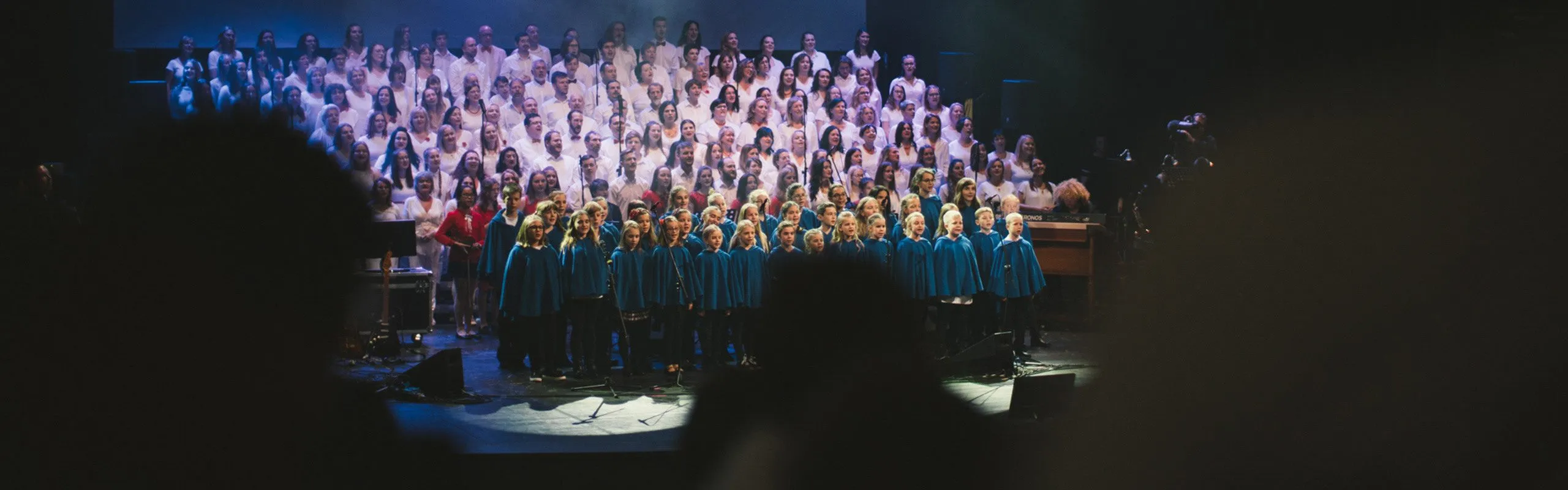
As a bold experiment, Terry launched a project called “Ostrava Sings the Gospel,” and invited people to join a city-wide Christmas choir. Sign-ups were through word of mouth and Facebook, and the group practiced for 5 weeks before performing a concert of rousing gospel music in the heart of the city.

The first year, the choir numbered 68, and over 1,000 tickets were sold for the two concerts.  The next year, the choir grew to 120, and another concert was added to meet the demand.  Terry’s bold experiment continued to grow, and this year the sign-ups for the choir filled up 170 spots within ten minutes. Ostrava Sings the Gospel reserved the largest concert hall in the city, selling out three performances for a total of 4,000 people.

Since most of the people who are singing in the choir don’t fully understand the message of the songs, a portion of each practice is devoted to explain the text. At these practices, choir members who came to faith through the ministry give their testimonies, and members are encouraged to join discovery Bible studies after the event. During the concert, the gospel message is explained and this year over 1,800 people took the offer to receive copies of John’s Gospel.
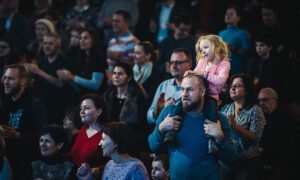
The event has gained such a reputation that it is listed on Czech travel sites as a recommended Christmas destination, and this year’s concert was broadcast on national television on Christmas Day, reaching a nation-wide audience. Other JV staff have followed Terry’s example, and this year “Sings the Gospel” outreach events were held by churches in 5 different cities. In total, over 500 people performed for around 8,000 audience members, including “Bratislava Sings the Gospel,” which was launched by staff members Mark and Amy Chase last year, selling out all 1,500 seats in the national broadcasting theater.

Sometimes bold experiments can have surprising results. Praise God with us for the opportunity to sing the gospel to people who have not yet heard the good news.


Dave Patty President

Related Posts

Read Story

Discipleship, Evangelism, Stories

A New Generation of Missionaries

Dear Friends, “I am sending you.” —Jesus At the end of January, I spent a week with 52 new Josiah Venture missionaries at our winter Academy. Talking with them at meals and in training sessions, I was overwhelmed with the quality and passion of this next generation of missionaries. Let me briefly tell you a few of their stories. Klemen (Slovenia) trusted Christ at 16 years of age when his best friend—the son of JV missionaries—shared the gospel with him on a napkin and challenged him to put his faith in Jesus. With so few evangelical believers in Slovenia, Klemen experienced rejection from his friends and is still the only believer in his extended family. Because of his heart for young people, Klemen studied physical science and became a PE teacher but was so outspoken about his faith that the principal didn’t extend his contract. At that point, our JV staff challenged him to join the team, and he experienced God’s call into full-time ministry. Now, he is helping local churches develop outreach programs to reach the lost. Klemen’s vision? That 30% of Slovenia would become followers of Jesus. Gabriel (Romania) grew up in a Christian home as the son of a pastor. At a youth camp when he was 16, Gabe put his faith in Christ. From that point on, he spent all of his free time serving in church. He experienced God’s call into ministry at 18 and spent the next four years in theological study. However, as is typical in Romania, his church was very traditional and inward-focused. When he began to lead the youth group, there were just five attending—all from Christian families. Then, some members of the JV Romania team began to train Gabe on how to reach the lost using the tool of Fusion, a rock/gospel choir that builds community through music. Soon, the entire culture of the youth group was transformed, and unbelievers were drawn in, inviting more of their friends and coming to faith in Christ. The youth group grew to 100 in a church with just 200 members, and the entire community was impacted. Now Gabe has joined the JV team to equip other churches like his to reach the lost. “I would love for all the churches in Romania to experience this,” he said, “that the church can have an impact on the outside and share the gospel in a relevant way. That would change our country.” Kendra (Ukraine) is a second-generation JV missionary, raised on the mission field. After her graduation from Wheaton college in Illinois, she responded to God’s call to serve in a very challenging location—near the city of Kyiv, Ukraine, in the midst of war. It is a dangerous assignment for a young woman, but Kendra feels privileged to bring the light of Jesus to young people in the midst of physical darkness and great uncertainty. She learned the Ukrainian language in just 6 months, and is now experiencing open doors for ministry across her entire city. God is using her bold faith to draw many to himself. I can’t wait to see what God will do through these committed young missionaries! They can be sent because you stand with them through your prayers and generous support. Thank you. Dave Patty President, Josiah Venture

Read Story

Events, Stories

The Right Learning for the Right Person at the Right Time

Stop and think about the times in your life when you grew the most. What were you doing? What were the circumstances? What did you feel? What were you excited about, and what were you worried about? When I look back on my own life, I notice a pattern. Growth usually happens when the challenge in front of us is outside of our comfort zone or outside of our skill level. It happens when we’re stretched. I remember learning this in a very tangible way in college. I took a class called Experiential Learning, and, throughout the semester, we worked through various team-building exercises. At the end of the course, we went to a ropes course, which culminated in a challenge known as the “Pamper Pole”—a towering 10-meter telephone pole. The challenge was to climb to the top, stand on a tiny platform, and then leap to grab a trapeze bar. My professor had seen me go through most of the challenges fairly easily. Just as I was about to climb the Pamper Pole, he quietly walked up behind me, put something in my back pocket, and said, “Just in case you want a little bit bigger challenge.” I reached inside and found a blindfold. And I decided to put it on. I climbed the pole blindfolded, made it to the top, and then jumped. My hands hit the bar, but I didn’t grab it. Of course, I was strapped in, so I didn’t hit the ground, but that moment has stayed with me. Even though I didn’t “succeed” in the way I had hoped, I chose a harder pathway up, and I learned something important: growth often requires stepping into something beyond what we currently know how to do. The missionary life is a lot like that. When Brooke and I first stepped onto the mission field, we were eager and ready to say yes to whatever God put in front of us. We had vision, enthusiasm, and a desire to serve. But looking back, we didn’t realize how steep the learning curve would be or how much God still needed to form in us. Those early years were full of trial and error. We made countless mistakes and learned by trying something, realizing it didn’t work, and trying again. Over time, the Lord shaped us and grew us, but the learning curve was long. Some of the lessons we needed most came through hard seasons, and they didn’t come quickly. The Josiah Venture Winter Academy was established to help provide the resources necessary to give our staff a foundation for healthy, effective ministry that lasts, grounded in Christ’s strategy, and strengthened by shared language, practical tools, and a community that helps them grow through every season. This year, we gathered 52 Josiah Venture staff at our training center in Malenovice, Czech Republic, for a week of discussion, connection, and spiritual encouragement. Every staff member has the opportunity to participate in Winter Academy within their first year on the team (Year 1 track) and again within their second year (Year 2 track). At its core, Winter Academy is about helping our staff build a foundation that will serve them for the long haul, so they can be steady and fruitful through the ups and downs of ministry. Ministry is full of seasons. There are times of blossoming, when the work feels joyful and full of momentum, and there are times of drought, when setbacks and discouragement threaten to parch the soul. Some seasons even hold those highs and lows at the same time. Jeremiah 17:7–8 reads: “Blessed is the one who trusts in the Lord, whose confidence is in him. They will be like a tree planted by the water that sends out its roots by the stream. It does not fear when heat comes; its leaves are always green. It has no worries in a year of drought and never fails to bear fruit.” These verses don’t deny hardship; they assume it. But it also points us to the keys to long-term fruitfulness: staying rooted and drawing consistently from the resources we have in Christ. Winter Academy was created to help staff establish those roots early. We wanted to shorten the learning curve so that new staff would be prepared for the obstacles they would inevitably face, and so they could respond with bold faith, with wisdom drawn from best practices across the team, and with perseverance, knowing they would have a team standing with them. Year 1 focuses on the path of a growing disciple. Our first-year staff get grounded in who we are as Josiah Venture and how Christ’s strategy shapes everything we do. They also learn the Five Challenges of Christ in a way that moves beyond theory into real life and real ministry. Year 2 is focused on ministry coaching through the Five Phases. Year 2 builds on that discipleship foundation and helps our staff grow in how they serve and multiply through others. Participants learn how to evaluate ministry health and direction as well as practice coaching conversations that help leaders take meaningful next steps. Once our staff complete Winter Academy (Years 1 and 2), we want them to know three things with certainty: I am not alone. I know who to turn to for help. I look to Jesus as my model for ministry. We’re grateful for what God has done through Winter Academy over the years, and we invite you to join us in praying that this event continues to deepen roots, strengthen faith, and produce fruit that lasts.

Read Story

Stories

Christmas Traditions

Every culture has its own Christmas traditions. Many of us already have our Christmas trees up, have begun playing our favourite Christmas music, and are checking items off our shopping list. In most European cities, Christmas markets have taken over town squares and observe their own unique traditions for Christmas Day. For example, in Poland, families prepare an extra place at the table in case of an unexpected guest; in Bulgaria, the oldest person in the house breaks open homemade bread with a coin baked inside; and in Czechia, children hide a fish scale under their dinner plate for good luck. Traditions are a wonderful thing as long as we remind ourselves why we keep them. One tradition that has meant a lot to my family and me for many years is lighting an Advent wreath. We usually make ours out of fir branches and four white candles, sometimes adding extra decorations like dried orange slices or pinecones. Then on the four Sundays leading up to Christmas, we read from the Bible, say prayers, sing songs, and light the candles in an increasing number: first one, then two, then three, and finally four. This tradition has its origins in the sixth century, and many European churches and Christians practice it. But after such a long time, it is easy to forget what it all means. Here is some of the significance. First of all, Advent derives from the Latin word for “coming, arrival.” It denotes the beginning of the year for Christians, who prepare our hearts for the arrival of God, by both remembering Jesus’ incarnation and anticipating his second coming. The circular shape of the wreath signifies the never-ending nature of God’s love for humanity. The fir branches remind us that, even in the dead of winter, God is at work to bring forth new life. And the successive lighting of the candles signals God’s determination to send his light into the world: the incarnation of his son. We love this tradition, but, to be honest, we don’t always keep it perfectly. This year, we had to dig out some old candles to use for our wreath, we have struggled to get through the Bible readings with our young children, and we often forget to light the right candle on the right day. But God is teaching me that this is alright. The season of Advent, along with its many traditions, is not made more or less meaningful by how faithfully I keep it. The season of Advent is made most meaningful because of how faithful God is at drawing near to us. The Apostle Paul summarised it well: “But when the right time finally came, God sent his own Son… so that we might become God’s children.” (Gal. 4:4-5, GNT). This Advent, may you find renewed meaning in your traditions. And may you remember and rely on God, who is most faithful to draw near to those who need his light.