
October 4, 2017

Dangerous Teaching - Fall Conference

A young, Slovenian leader passionate about the story of God, but not always confident she knows how to share the gospel well. A Christ-following dad with a platform to give parenting advice in his country of Latvia, which is full of broken families. Or a teenager making godly decisions in her Slovak high school when many of her peers are not.

If these three didn’t know that transformational teaching was dangerous before our Fall Conference, which took place at Josiah Venture’s Malenovice training center in the Czech Republic last week, they know it now.

In fact, Rob Trenckmann, JV team leader in Hungary and conference director, said as much in his closing talk. “Teaching for transformation isn’t just hard, or difficult, or scary, or something new to learn, it’s dangerous. If you’re a sane person, or a cautious person, or probably a wise person, you should just leave it alone…. Because it can turn cities upside down. It can cause riots. It can move hearts that love Jesus and other hearts that hate Jesus. When we teach like Jesus, people have to respond. It’s incredibly dangerous.”

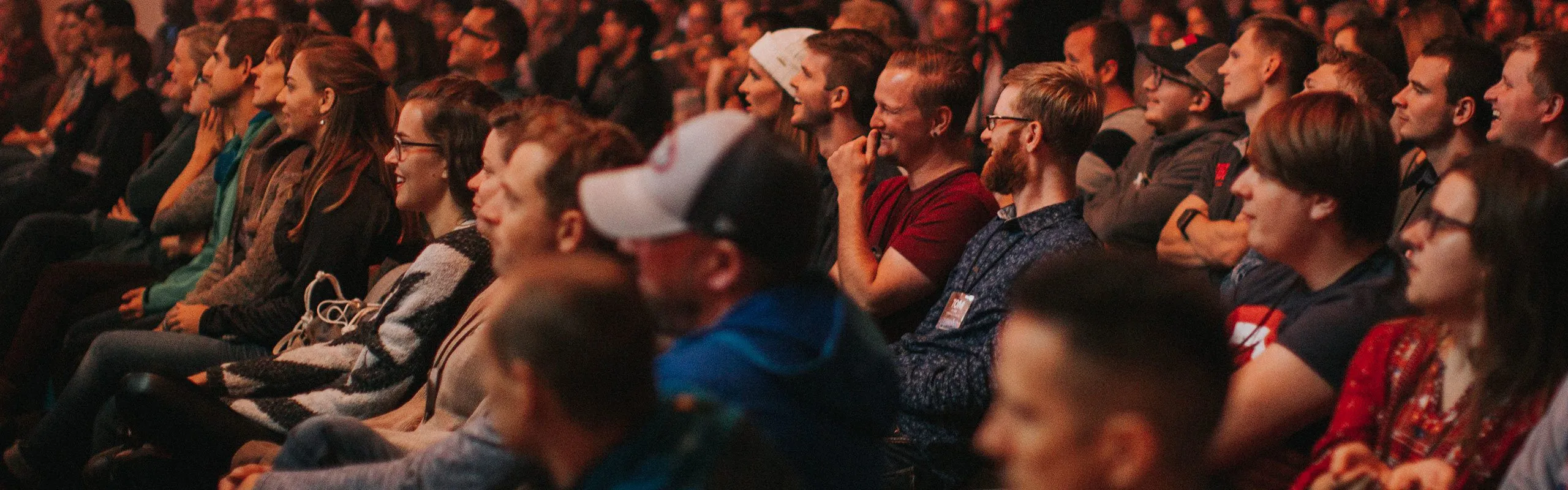
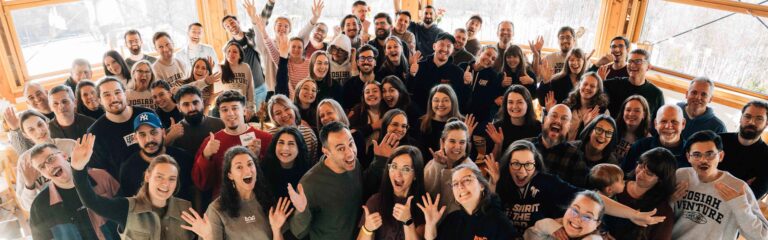
The three above and the 380 or so other youth leaders from 15 countries in Central and Eastern Europe who came together for our annual event could easily back away from the opportunities God has given them to teach like Jesus out of fear of what could happen if they did.

Yet the conference wasn’t planned to discourage them from stepping out and speaking up about their faith. It was intentionally designed to do the opposite. Here are some of the ways people were challenged to become better teachers, in whatever capacity they teach, at conference this year.
 

Inspiring Stories

First, conference was full of chances to hear inspiring stories about ordinary people, whether biblical or current-day, who were called by God to spread His message of hope in extraordinary ways.

Rob Trenckmann talked about Jesus’ disciple Peter who sometimes spoke up at the wrong times and didn’t always speak up at the right times. Vahur Kobin, team leader in Estonia, reminded us in his evening talk that King Josiah in the Old Testament, and who Josiah Venture is named after, was used by God to communicate truth and bring a whole nation back to spiritual health, in spite of having a wicked grandfather and father.

We also heard stories of teachers making an impact today. Dave Patty, JV president, brought nationals on stage during sessions to interview them on their lives and ministries. One of these teachers was Yulia Pasichni from Ukraine who discipled a girl, who discipled a girl, and so on to the fourth generation. We watched videos of others who have seen God work through their leadership and teaching and challenged us to keep going. We said goodbye to Märt Saar, who has worked with us in Estonia for a long time, and he perfectly captured what most of us feel, “I can’t give back what you gave to me, but I can give it further.”


Engaging Examples

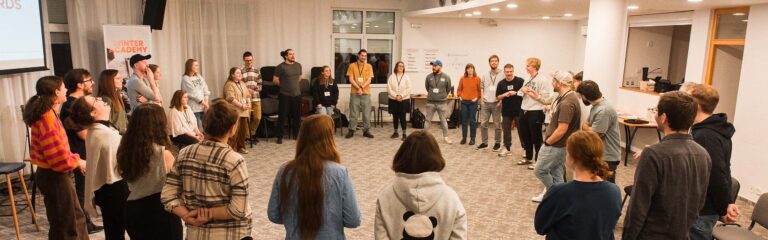
Besides hearing stories, even more than at other JV conferences, attendees this past week got to see transformational teaching in action. These engaging examples were relatable and came in a wide variety of ways and with a bunch of different teachers involved. From morning workouts led by Edge sports coaches to cohort sessions where Dave Patty, Rob Trenckmann, and Steve Patty taught and many others facilitated discussion groups, there were plenty of opportunities to see how transformational teaching can work in people’s specific ministry settings, incorporating the unique gifts and interests people have.

In the area of music, we got to see Faith Child, a rapper who partners with us in our Exit Tour ministry, perform a concert. What Korban Miller, our worship leader, called “the United Nations band,” was made up of musicians from almost all of the countries represented at conference and they led us in worship throughout the week. Singing in multiple languages was a highlight that purposefully embodied transformational teaching through music.

On Thursday morning, we had Master Classes. Taught by 19 staff members on topics like using strong illustrations in your teaching, dialogue and asking the right questions, and teaching for the teenage brain, conference attendees got to choose four of these classes to attend. On top of these, optional sessions called “Creme Brulees” were offered during free-time which gave people even more chances to learn. Of course, there were also our formal evening sessions where we heard from four main teachers on teaching to transform, the call of the teacher, the heart of the teacher, and the soul of the teacher.
Encouraging Relationships

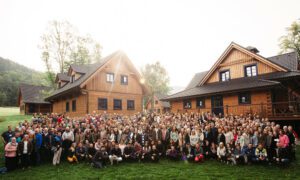
Maybe the most transformational aspect of conference though was simply getting time to meet and connect with others from across the region, who are not letting the fact that teaching like Jesus is dangerous stop them from doing brave and bold things for the sake of the gospel.

Through meals together, volleyball and soccer tournaments, sharing rooms and experiences, the young leaders who may sometimes feel alone and misunderstood in their countries of few Christians got to engage in dynamic community.

Now that they’re back at home and into the reality of fall ministry, we’re praying that they continue to remember Rob’s last words to us, “We are telling the greatest story the world has ever known. We have the most important message that anyone could ever hear. And we want it to spread. And we want it to transform. And we want it to turn the world upside down. It is incredibly dangerous, but it’s what everyone needs to hear.”

Click here to listen to teaching from our conference or visit our Facebook page to watch videos of evening sessions.
Related Posts

Read Story

Events, Stories

The Right Learning for the Right Person at the Right Time

Stop and think about the times in your life when you grew the most. What were you doing? What were the circumstances? What did you feel? What were you excited about, and what were you worried about? When I look back on my own life, I notice a pattern. Growth usually happens when the challenge in front of us is outside of our comfort zone or outside of our skill level. It happens when we’re stretched. I remember learning this in a very tangible way in college. I took a class called Experiential Learning, and, throughout the semester, we worked through various team-building exercises. At the end of the course, we went to a ropes course, which culminated in a challenge known as the “Pamper Pole”—a towering 10-meter telephone pole. The challenge was to climb to the top, stand on a tiny platform, and then leap to grab a trapeze bar. My professor had seen me go through most of the challenges fairly easily. Just as I was about to climb the Pamper Pole, he quietly walked up behind me, put something in my back pocket, and said, “Just in case you want a little bit bigger challenge.” I reached inside and found a blindfold. And I decided to put it on. I climbed the pole blindfolded, made it to the top, and then jumped. My hands hit the bar, but I didn’t grab it. Of course, I was strapped in, so I didn’t hit the ground, but that moment has stayed with me. Even though I didn’t “succeed” in the way I had hoped, I chose a harder pathway up, and I learned something important: growth often requires stepping into something beyond what we currently know how to do. The missionary life is a lot like that. When Brooke and I first stepped onto the mission field, we were eager and ready to say yes to whatever God put in front of us. We had vision, enthusiasm, and a desire to serve. But looking back, we didn’t realize how steep the learning curve would be or how much God still needed to form in us. Those early years were full of trial and error. We made countless mistakes and learned by trying something, realizing it didn’t work, and trying again. Over time, the Lord shaped us and grew us, but the learning curve was long. Some of the lessons we needed most came through hard seasons, and they didn’t come quickly. The Josiah Venture Winter Academy was established to help provide the resources necessary to give our staff a foundation for healthy, effective ministry that lasts, grounded in Christ’s strategy, and strengthened by shared language, practical tools, and a community that helps them grow through every season. This year, we gathered 52 Josiah Venture staff at our training center in Malenovice, Czech Republic, for a week of discussion, connection, and spiritual encouragement. Every staff member has the opportunity to participate in Winter Academy within their first year on the team (Year 1 track) and again within their second year (Year 2 track). At its core, Winter Academy is about helping our staff build a foundation that will serve them for the long haul, so they can be steady and fruitful through the ups and downs of ministry. Ministry is full of seasons. There are times of blossoming, when the work feels joyful and full of momentum, and there are times of drought, when setbacks and discouragement threaten to parch the soul. Some seasons even hold those highs and lows at the same time. Jeremiah 17:7–8 reads: “Blessed is the one who trusts in the Lord, whose confidence is in him. They will be like a tree planted by the water that sends out its roots by the stream. It does not fear when heat comes; its leaves are always green. It has no worries in a year of drought and never fails to bear fruit.” These verses don’t deny hardship; they assume it. But it also points us to the keys to long-term fruitfulness: staying rooted and drawing consistently from the resources we have in Christ. Winter Academy was created to help staff establish those roots early. We wanted to shorten the learning curve so that new staff would be prepared for the obstacles they would inevitably face, and so they could respond with bold faith, with wisdom drawn from best practices across the team, and with perseverance, knowing they would have a team standing with them. Year 1 focuses on the path of a growing disciple. Our first-year staff get grounded in who we are as Josiah Venture and how Christ’s strategy shapes everything we do. They also learn the Five Challenges of Christ in a way that moves beyond theory into real life and real ministry. Year 2 is focused on ministry coaching through the Five Phases. Year 2 builds on that discipleship foundation and helps our staff grow in how they serve and multiply through others. Participants learn how to evaluate ministry health and direction as well as practice coaching conversations that help leaders take meaningful next steps. Once our staff complete Winter Academy (Years 1 and 2), we want them to know three things with certainty: I am not alone. I know who to turn to for help. I look to Jesus as my model for ministry. We’re grateful for what God has done through Winter Academy over the years, and we invite you to join us in praying that this event continues to deepen roots, strengthen faith, and produce fruit that lasts.

Read Story

Discipleship, Evangelism, Stories

Home

Sajmir just wanted to belong. As the youngest son in a Muslim family of eight children, he was expected to serve everyone. Sajmir’s family was oppressed in Albania because they were dark skinned Gypsies. On top of that, during the difficult time after the revolution, his father began drinking and beating his mother. “My father never beat me,” Sajmir said, “but he never showed me love. He never hugged me or kissed me. I never saw a father figure. I was afraid of him. Also, outside in the city, people were not very close to me. I spent most of my time alone, playing soccer alone, or basketball alone.” There was only one soccer field in his village, and when Sajmir tried to join a game, the other kids would kick him out. One day, a group came toward the field and Sajmir began to back away, sure they would ask him to leave. “Will you play with us?” they asked. “You want to play with me?” Sajmir replied. For the first time in his life, someone invited him in. After the game, they invited him to church. “What is a church?” he said. Running home, he asked his parents if he could go. “Don’t go to church,” they answered sternly, “you will shame us.” But the next day was Sunday, and he snuck out when no one was looking. “When I stepped into the church, at the door, someone gave me a hug for the first time in my life,” Sajmir said. “They put me in the first row. I felt like a celebrity. Then I heard the story that someone loves you just as you are, that is, Jesus—as I was, dark skinned, rejected. But still, there is someone who died for me.” “I ran and told my family, but their response was: ’If you go one more time, we will tell your brother to beat you up.’ I went again. My brother beat me up. For three months, I was beaten every week. I was loved and accepted in church, while suffering and being beaten in my family. Then my mom said, ‘Let him go.’” Filled with joy, Sajmir fell on his knees and said, “God, I will serve you wherever you want me to.” That was 25 years ago, and today Sajmir and his family are part of our Josiah Venture team in Albania. Through youth ministry, he recently planted a church called “Mosaic,” which has grown to over 100 people. Every day, young people come after school and in the evening for tutoring, children’s meetings, youth meetings, small groups, discipleship groups, and a very lively Fusion choir. The church is open every day, from 9:00 am to 7:00 pm, and there is always something happening. “Our building is a daily home for everyone; it’s a family,” says Sajmir. “I always remember what God did for me in my youth. My heart is burning to see more young people come to Christ and find that they are loved and belong.” During this Advent season, we remember how Jesus left his home to make a home for us. He was sent to find us, where we play our games alone, and to invite us into his family. He found Sajmir, and you, and me. Thanks for helping us share this good news with young people who are still without a home. Dave Patty President, Josiah Venture

Read Story

Events, Stories

You’re Not Alone in the Battle

When you’re used to leading, serving, and pouring into others, what happens when you suddenly can’t? What happens when the person who normally encourages everyone else wakes up and realizes she has nothing left to give? That’s where I found myself last year. I’m naturally a driven person. I love to see progress—to watch people grow, ministries flourish, and God’s work move forward. But last year, right before a major conference I had been preparing for—a mental health summit for nearly 700 youth leaders and church leaders—everything stopped. I got sick, and my normal pace of life vanished overnight. Suddenly, I couldn’t do what I thought I had to do. At first, I tried to stay positive, to find purpose in the pause. I told myself God was teaching me patience, humility, or to delegate better. But underneath those thoughts, a more dangerous narrative started to form: “God is disappointed in you.” “You’re not strong enough.” “You’re failing as a leader.” “Maybe God is holding back because you don’t deserve his help.” Those are the kinds of lies that can take root quietly—and quickly. It’s the same old whisper the enemy used in the Garden: “Did God really say…?” (Genesis 3:1). The serpent’s goal was never just to tempt Eve; it was to make her question God’s heart. And he still uses that same strategy today. He wants us to believe that God is distant, that we’re alone, unseen, and unloved. I’ve seen this pattern not only in my life, but in the lives of so many young people and leaders I’ve walked with. The moment things get hard—disappointment, exhaustion, relational conflict, failure—the enemy twists the truth. He tells us we’re forgotten, that our prayers don’t matter, and that no one really understands. And slowly, we start to isolate ourselves. But isolation is one of his most effective weapons. Once we withdraw, our vision blurs. We stop hearing the truth clearly. We start interpreting everything through the lens of fear, shame, and self-pity. Even Scripture is full of people who felt this same ache. David cried, “Turn to me and be gracious to me, for I am lonely and afflicted” (Psalm 25:16). Elijah, after a great victory, ran into the wilderness and said, “I have had enough, Lord” (1 Kings 19:4). Job sat surrounded by friends who misunderstood him. And even Jesus—our Savior—experienced complete abandonment in Gethsemane and on the cross. Loneliness and lies are not new, but neither is God’s response to them. In my own season of weakness, when I couldn’t find the strength to pray, others prayed for me. When I felt unseen, people showed up with meals, with text messages, and with quiet presence. Even my unbelieving neighbors said, “We think someone up there cares about you.” That was God reminding me: You are not forgotten. You are not alone. The truth is, the Body of Christ was never meant to function in isolation. Strength in God’s kingdom doesn’t mean independence—it means connection. It means letting others carry you when you can’t walk and trusting that God is at work even when you can’t see progress. This experience also helped me recognize a pattern: the enemy always attacks identity and connection first. He wants to disconnect us from God’s truth and from God’s people. But the way we stand firm is by returning to both. When I start to spiral now—when I believe I have to prove my worth or carry everything alone—I stop and remind myself of what’s true. I reach out to trusted friends and ask for prayer. I ground myself in simple spiritual and physical practices that bring me back to reality: breathing deeply, reading a psalm, or stepping outside to notice beauty. These small moments become declarations of faith. Romans 11:33-36 says, “Oh, how great are God’s riches and wisdom and knowledge! How impossible it is for us to understand his decisions and his ways!” That verse anchors me. I don’t have to understand everything; I just have to trust the one who does. Maybe you’re in a similar place right now. Or maybe you’re walking with young people who feel lost, invisible, or stuck in lies about who they are. The battle is real, but so is our victory in Christ. So, here’s my invitation to you: Would you take a moment to pray—for yourself, for your friends, and for the next generation—that we would recognize the lies of isolation, stand firm in truth, and live connected as the Body of Christ? You’re not alone in the battle. And neither are they.