July 20, 2014

Faithful Discipleship: Maruška’s Story

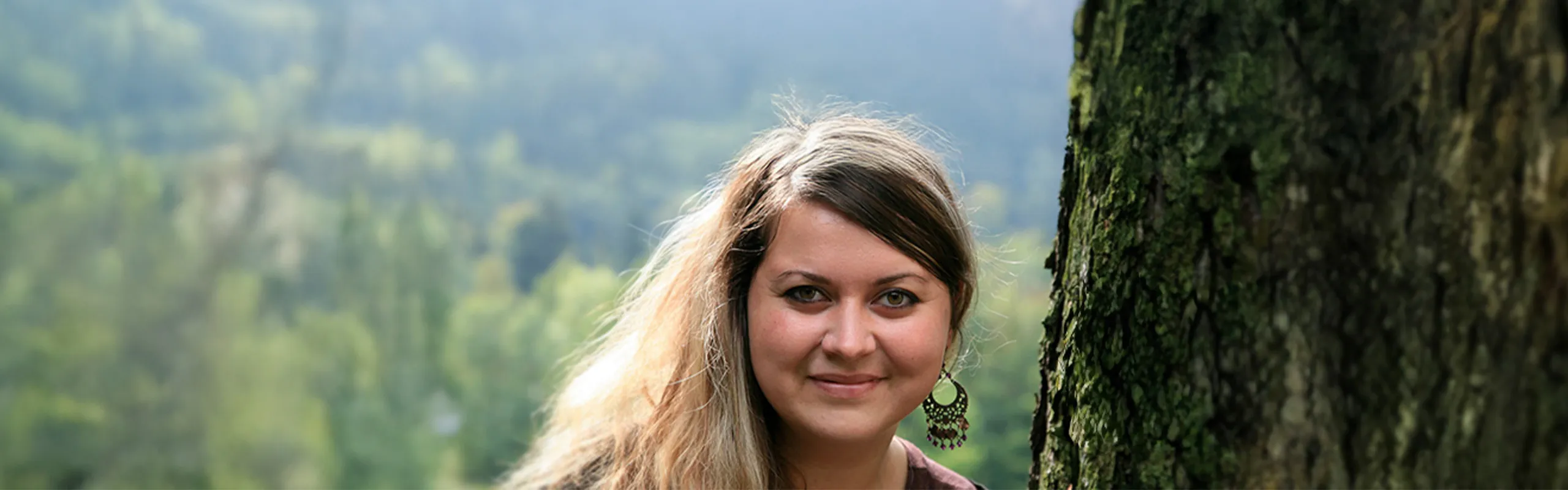
Maruška Kožlejová learned about Christ at a young age and became involved in ministry in her church youth group when she was only 17. She is a part of the Josiah Venture leadership team in Slovakia and is the director of one of the largest youth leader conferences in Europe. She lives in Presov where her heart for discipleship is inspiring and contagious.

Q: How did you first become involved in youth ministry?

A: I became a Christian when I was 9. I’m from a Lutheran church, which is a pretty traditional church in some ways. In 2000, I was working in my village of 700 people and when I was 17 we started a new ministry at my church. Basically, in a few months of faithfully praying and searching for people outside the church, there was a revival in our village. Every young person who could come came to the youth group and we had like 70 kids attending. I started to disciple some kids who began to lead the youth group with me.

Q: What about with Josiah Venture?

A: When I was leading the youth group, we went to a conference for youth leaders and there was an activity there where we were supposed to paint pictures of the structure of our group, who was influenced by whom and who was discipling whom. The other leaders, who were there with me, made a structure with me somewhere in the middle. Danny Jones, who was a missionary with Josiah Venture at the time, found the structure. It was really different from other groups and he wanted to know who was the person in the middle. That’s how I was invited to be a part of Kompas, JV’s partner organization in Slovakia. They wanted to know my story more and how youth ministry worked in our village. I was probably around 20 at the time and I started volunteering with them. When I finished my Masters, I was invited to start full-time ministry with Kompas. I joined the staff five years ago, when I was 25.

Q: What are you doing now?

Now, I am the director of an annual conference for youth leaders. It’s the biggest youth conference in all of JV’s countries and maybe in all of Europe. It has 700 youth workers who are coming to it. I also serve in training programs with Kompas and I’ve been speaking at JV’s fall training conference for the past three years.

I am also a writer. I wrote a book together with another girl on our Slovak JV team. It’s a book about discipleship for girls called On Display. I tried to include all the things I’ve learned from Josiah Venture and observing the missionaries. It was published just 2 months ago, in the Slovak language, and girls are now studying it. This is how we are trying to pass on what we have learned to others in our country.

Q: What stands out to you about JV as an organization?

A: I had never seen such health in families before. I was wondering how it was possible. In Slovakia a lot of families are messed up and Christian families are not always better. There is so much bitterness and unforgiveness, even among Christians. It’s really sad. That’s what I loved about JV, that they just set this great example of health in families, health in marriages; there are just healthy, beautiful women in JV. This was something totally new for me and I decided I really wanted to fight for that and know everything possible about that. I started asking questions and I learned about how I could submit to authorities even though I’m a strong leader and how I can bless people with my leadership under someone else’s leadership. This was totally new and probably the biggest and most influential thing I have gotten from JV.

Q: What excites you most about JV?

A: I really like JV’s DNA for two reasons. First, it’s based on Christ’s life and strategy. JV is very Christ-centered and that’s unique and special among other mission organizations.

Second, I love JV’s bigger picture. I went to a JV fall conference 5 years ago. I loved when Mel Ellenwood and Dave Patty were sharing the big picture and I could see God’s movement through the countries. I was amazed and felt very proud to be a part of it in some ways. I also really like the Advance ministry (healthy, reproducing churches) of JV –that we are trying to figure out what happens when youth hit the ceiling and are not in the age of youth groups anymore. Where are the spaces where they can be implemented into the church? It’s a big problem in my church. We are losing people after youth group, as they don’t connect to the larger church body. So, I love that JV is thinking about the bigger picture.

Q: What is your vision for the next year? Next 20?

A: In the next year there are going to be a lot of changes. I’m getting married and I’m starting a new life. I don’t know exactly what it will look like and it’ll be a year of transition for me.

So far, I am the only woman on the leadership team in Kompas. I’d love to see more young, really healthy women being grown in faith, being Christ-centered, being in leadership positions, being wise and heard.

For the next 20 years, and the next 50 years, I want to be a disciple-maker who will make disciples, who make disciples, who make disciples. I can see such a strength in being faithful in discipleship, walking with people for years, teaching them through Christ’s strategy, multiplying and sending them out. I’ve already seen the fruit of this and I’m just so happy to be a part of it. If nothing else, whether or not I’m working with JV, this is what I am going to do for the rest of my life.

As Maruška gets married and starts her own family this year, Josiah Venture stands with her in praying for the health of families in Slovakia and the fruit of faithful discipleship.


Related Posts

Read Story

Stories

Christmas Traditions

Every culture has its own Christmas traditions. Many of us already have our Christmas trees up, have begun playing our favourite Christmas music, and are checking items off our shopping list. In most European cities, Christmas markets have taken over town squares and observe their own unique traditions for Christmas Day. For example, in Poland, families prepare an extra place at the table in case of an unexpected guest; in Bulgaria, the oldest person in the house breaks open homemade bread with a coin baked inside; and in Czechia, children hide a fish scale under their dinner plate for good luck. Traditions are a wonderful thing as long as we remind ourselves why we keep them. One tradition that has meant a lot to my family and me for many years is lighting an Advent wreath. We usually make ours out of fir branches and four white candles, sometimes adding extra decorations like dried orange slices or pinecones. Then on the four Sundays leading up to Christmas, we read from the Bible, say prayers, sing songs, and light the candles in an increasing number: first one, then two, then three, and finally four. This tradition has its origins in the sixth century, and many European churches and Christians practice it. But after such a long time, it is easy to forget what it all means. Here is some of the significance. First of all, Advent derives from the Latin word for “coming, arrival.” It denotes the beginning of the year for Christians, who prepare our hearts for the arrival of God, by both remembering Jesus’ incarnation and anticipating his second coming. The circular shape of the wreath signifies the never-ending nature of God’s love for humanity. The fir branches remind us that, even in the dead of winter, God is at work to bring forth new life. And the successive lighting of the candles signals God’s determination to send his light into the world: the incarnation of his son. We love this tradition, but, to be honest, we don’t always keep it perfectly. This year, we had to dig out some old candles to use for our wreath, we have struggled to get through the Bible readings with our young children, and we often forget to light the right candle on the right day. But God is teaching me that this is alright. The season of Advent, along with its many traditions, is not made more or less meaningful by how faithfully I keep it. The season of Advent is made most meaningful because of how faithful God is at drawing near to us. The Apostle Paul summarised it well: “But when the right time finally came, God sent his own Son… so that we might become God’s children.” (Gal. 4:4-5, GNT). This Advent, may you find renewed meaning in your traditions. And may you remember and rely on God, who is most faithful to draw near to those who need his light.

Read Story

Discipleship, Evangelism, Stories

Home

Sajmir just wanted to belong. As the youngest son in a Muslim family of eight children, he was expected to serve everyone. Sajmir’s family was oppressed in Albania because they were dark skinned Gypsies. On top of that, during the difficult time after the revolution, his father began drinking and beating his mother. “My father never beat me,” Sajmir said, “but he never showed me love. He never hugged me or kissed me. I never saw a father figure. I was afraid of him. Also, outside in the city, people were not very close to me. I spent most of my time alone, playing soccer alone, or basketball alone.” There was only one soccer field in his village, and when Sajmir tried to join a game, the other kids would kick him out. One day, a group came toward the field and Sajmir began to back away, sure they would ask him to leave. “Will you play with us?” they asked. “You want to play with me?” Sajmir replied. For the first time in his life, someone invited him in. After the game, they invited him to church. “What is a church?” he said. Running home, he asked his parents if he could go. “Don’t go to church,” they answered sternly, “you will shame us.” But the next day was Sunday, and he snuck out when no one was looking. “When I stepped into the church, at the door, someone gave me a hug for the first time in my life,” Sajmir said. “They put me in the first row. I felt like a celebrity. Then I heard the story that someone loves you just as you are, that is, Jesus—as I was, dark skinned, rejected. But still, there is someone who died for me.” “I ran and told my family, but their response was: ’If you go one more time, we will tell your brother to beat you up.’ I went again. My brother beat me up. For three months, I was beaten every week. I was loved and accepted in church, while suffering and being beaten in my family. Then my mom said, ‘Let him go.’” Filled with joy, Sajmir fell on his knees and said, “God, I will serve you wherever you want me to.” That was 25 years ago, and today Sajmir and his family are part of our Josiah Venture team in Albania. Through youth ministry, he recently planted a church called “Mosaic,” which has grown to over 100 people. Every day, young people come after school and in the evening for tutoring, children’s meetings, youth meetings, small groups, discipleship groups, and a very lively Fusion choir. The church is open every day, from 9:00 am to 7:00 pm, and there is always something happening. “Our building is a daily home for everyone; it’s a family,” says Sajmir. “I always remember what God did for me in my youth. My heart is burning to see more young people come to Christ and find that they are loved and belong.” During this Advent season, we remember how Jesus left his home to make a home for us. He was sent to find us, where we play our games alone, and to invite us into his family. He found Sajmir, and you, and me. Thanks for helping us share this good news with young people who are still without a home. Dave Patty President, Josiah Venture

Read Story

Stories

A Thanksgiving Challenge and Promise

Philippians 4:4-7 states, “Rejoice in the Lord always; again I will say, rejoice. Let your reasonableness be known to everyone. The Lord is at hand; do not be anxious about anything, but in everything by prayer and supplication with thanksgiving let your requests be made known to God. And the peace of God, which surpasses all understanding, will guard your hearts and your minds in Christ Jesus.” Two things stand out to me from this verse: a challenge and a promise. The Challenge: Christians are commanded to not be anxious about anything. Instead, we are to be thankful. Paul wrote this letter as he was in prison, preparing for his martyrdom. He acknowledged that his entire ministry was in the Lord’s power and he had nothing to be anxious about. Furthermore, his friends were not supposed to be anxious either. Rather, they were to thank the Lord for his provision and truth. In this situation, Paul was not instructing his friends to deny that there was hardship. He admitted that there would be pain in the future. However, with that, the Church was to devote all troubles to the Lord. How would this play out in a modern Thanksgiving Day context? Jenny Llamas was born in the Czech Republic, so she did not grow up with Thanksgiving. Landen, her American husband, did and has had so much fun introducing the holiday to her. From American football to turkey trots to sweet potato casserole with marshmallows, Landen and Jenny love getting to spend Thanksgiving either with their family or at Josiah Venture’s conference center in Malenovice, Czech with Josiah Venture missionaries. One challenge for Jenny, though, has been when people are asked to share what they are thankful for. It’s not the mental search for thankfulness that’s difficult for Jenny. Instead, it’s all the other thoughts that come to her mind too. It’s “the hard things in my life that sometimes even seem louder than the things I’m thankful for,” Jenny said. During these times, she wants to find ways to process and acknowledge times of hardship while also remaining thankful. So, how does Jenny do that when she is reminded of hard times during Thanksgiving? How does she process both pain and thankfulness? Jenny’s favorite part of Thanksgiving is the meal preparation. She has her own quiet time in the kitchen. As she experiments with all sorts of traditional American recipes, she reflects on how God has worked in her life over the past year. She recalls the exciting times of blossoming relationships with friends and the painful memories of things uncertain and hurtful. It’s in these moments that Jenny brings everything to God, both the good and the bad. That’s where the promise of Philippians comes into play. The Promise: In response to giving thanks, the Lord will surround us with his peace. When we submit to the Lord in thanksgiving, he places a spiritual shield around our hearts and minds. He takes us out of a state of fear and provides us with the ability to give thanks in all circumstances. When the meal preparation is complete and Jenny steps out to celebrate with friends, she reminds herself that God wants her to have peace. God has given her a spiritual family with whom she can process heartache and pain. He also provides her with the time to journal, writing down her thoughts as a way of acknowledging hardship and giving it to the Lord. Then, he gives her rest. “I say a quick prayer to the God who sees me,” she said. “I give myself permission to rejoice in what God has done and … take a break from the hard things knowing that God sees them and he holds them.” This Thanksgiving, I invite you to recognize the trials in your life and give them over completely to God. Replace the state of anxiety with the action of thankfulness, preparing your heart for worship as we enter into this holiday season. “The Lord is at hand.” (Phil. 4:5b)