September 7, 2013

Supporting our youngest missionaries

Dear Friends,

This month they head back to school.

Just like young people in your town, right? Well, not exactly. The children of the missionaries you support have the special challenge, and privilege, of going to school in a different language and culture. Instead of English grammar, they are learning how to conjugate Slavic nouns; instead of American history they are learning the names of kings that you’ve probably never heard of. If they are new on the field, school will be a total immersion language lab. Even for the veterans there are significant spiritual pressures. Most of them are the only believers in their class.

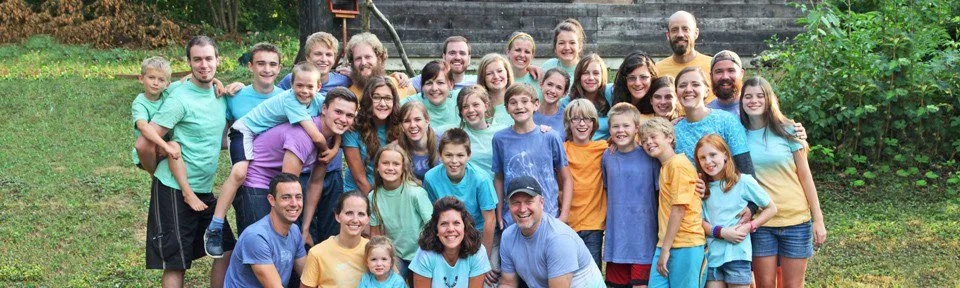
We care a great deal about the personal and spiritual health of our missionary kids. Every August we give them a week of camp together along with counselors chosen from the younger staff on the JV team. For most of them gathering with their fellow MK’s provides the place where they feel the most at home. This community shapes them, supports them and equips them as missionaries to their peers and their schools.

In our eyes their place on the team is every bit as important as their parents’. As you pray for the young people that just headed back to school in your town, would you remember the JV kids as well?

I have a special place in my heart for these precious young people. I was once a missionary kid just like them.

Dave Patty,
President, Josiah Venture

Dave Patty President

Related Posts

Read Story

Events, Stories

The Right Learning for the Right Person at the Right Time

Stop and think about the times in your life when you grew the most. What were you doing? What were the circumstances? What did you feel? What were you excited about, and what were you worried about? When I look back on my own life, I notice a pattern. Growth usually happens when the challenge in front of us is outside of our comfort zone or outside of our skill level. It happens when we’re stretched. I remember learning this in a very tangible way in college. I took a class called Experiential Learning, and, throughout the semester, we worked through various team-building exercises. At the end of the course, we went to a ropes course, which culminated in a challenge known as the “Pamper Pole”—a towering 10-meter telephone pole. The challenge was to climb to the top, stand on a tiny platform, and then leap to grab a trapeze bar. My professor had seen me go through most of the challenges fairly easily. Just as I was about to climb the Pamper Pole, he quietly walked up behind me, put something in my back pocket, and said, “Just in case you want a little bit bigger challenge.” I reached inside and found a blindfold. And I decided to put it on. I climbed the pole blindfolded, made it to the top, and then jumped. My hands hit the bar, but I didn’t grab it. Of course, I was strapped in, so I didn’t hit the ground, but that moment has stayed with me. Even though I didn’t “succeed” in the way I had hoped, I chose a harder pathway up, and I learned something important: growth often requires stepping into something beyond what we currently know how to do. The missionary life is a lot like that. When Brooke and I first stepped onto the mission field, we were eager and ready to say yes to whatever God put in front of us. We had vision, enthusiasm, and a desire to serve. But looking back, we didn’t realize how steep the learning curve would be or how much God still needed to form in us. Those early years were full of trial and error. We made countless mistakes and learned by trying something, realizing it didn’t work, and trying again. Over time, the Lord shaped us and grew us, but the learning curve was long. Some of the lessons we needed most came through hard seasons, and they didn’t come quickly. The Josiah Venture Winter Academy was established to help provide the resources necessary to give our staff a foundation for healthy, effective ministry that lasts, grounded in Christ’s strategy, and strengthened by shared language, practical tools, and a community that helps them grow through every season. This year, we gathered 52 Josiah Venture staff at our training center in Malenovice, Czech Republic, for a week of discussion, connection, and spiritual encouragement. Every staff member has the opportunity to participate in Winter Academy within their first year on the team (Year 1 track) and again within their second year (Year 2 track). At its core, Winter Academy is about helping our staff build a foundation that will serve them for the long haul, so they can be steady and fruitful through the ups and downs of ministry. Ministry is full of seasons. There are times of blossoming, when the work feels joyful and full of momentum, and there are times of drought, when setbacks and discouragement threaten to parch the soul. Some seasons even hold those highs and lows at the same time. Jeremiah 17:7–8 reads: “Blessed is the one who trusts in the Lord, whose confidence is in him. They will be like a tree planted by the water that sends out its roots by the stream. It does not fear when heat comes; its leaves are always green. It has no worries in a year of drought and never fails to bear fruit.” These verses don’t deny hardship; they assume it. But it also points us to the keys to long-term fruitfulness: staying rooted and drawing consistently from the resources we have in Christ. Winter Academy was created to help staff establish those roots early. We wanted to shorten the learning curve so that new staff would be prepared for the obstacles they would inevitably face, and so they could respond with bold faith, with wisdom drawn from best practices across the team, and with perseverance, knowing they would have a team standing with them. Year 1 focuses on the path of a growing disciple. Our first-year staff get grounded in who we are as Josiah Venture and how Christ’s strategy shapes everything we do. They also learn the Five Challenges of Christ in a way that moves beyond theory into real life and real ministry. Year 2 is focused on ministry coaching through the Five Phases. Year 2 builds on that discipleship foundation and helps our staff grow in how they serve and multiply through others. Participants learn how to evaluate ministry health and direction as well as practice coaching conversations that help leaders take meaningful next steps. Once our staff complete Winter Academy (Years 1 and 2), we want them to know three things with certainty: I am not alone. I know who to turn to for help. I look to Jesus as my model for ministry. We’re grateful for what God has done through Winter Academy over the years, and we invite you to join us in praying that this event continues to deepen roots, strengthen faith, and produce fruit that lasts.

Read Story

Events, Stories

You’re Not Alone in the Battle

When you’re used to leading, serving, and pouring into others, what happens when you suddenly can’t? What happens when the person who normally encourages everyone else wakes up and realizes she has nothing left to give? That’s where I found myself last year. I’m naturally a driven person. I love to see progress—to watch people grow, ministries flourish, and God’s work move forward. But last year, right before a major conference I had been preparing for—a mental health summit for nearly 700 youth leaders and church leaders—everything stopped. I got sick, and my normal pace of life vanished overnight. Suddenly, I couldn’t do what I thought I had to do. At first, I tried to stay positive, to find purpose in the pause. I told myself God was teaching me patience, humility, or to delegate better. But underneath those thoughts, a more dangerous narrative started to form: “God is disappointed in you.” “You’re not strong enough.” “You’re failing as a leader.” “Maybe God is holding back because you don’t deserve his help.” Those are the kinds of lies that can take root quietly—and quickly. It’s the same old whisper the enemy used in the Garden: “Did God really say…?” (Genesis 3:1). The serpent’s goal was never just to tempt Eve; it was to make her question God’s heart. And he still uses that same strategy today. He wants us to believe that God is distant, that we’re alone, unseen, and unloved. I’ve seen this pattern not only in my life, but in the lives of so many young people and leaders I’ve walked with. The moment things get hard—disappointment, exhaustion, relational conflict, failure—the enemy twists the truth. He tells us we’re forgotten, that our prayers don’t matter, and that no one really understands. And slowly, we start to isolate ourselves. But isolation is one of his most effective weapons. Once we withdraw, our vision blurs. We stop hearing the truth clearly. We start interpreting everything through the lens of fear, shame, and self-pity. Even Scripture is full of people who felt this same ache. David cried, “Turn to me and be gracious to me, for I am lonely and afflicted” (Psalm 25:16). Elijah, after a great victory, ran into the wilderness and said, “I have had enough, Lord” (1 Kings 19:4). Job sat surrounded by friends who misunderstood him. And even Jesus—our Savior—experienced complete abandonment in Gethsemane and on the cross. Loneliness and lies are not new, but neither is God’s response to them. In my own season of weakness, when I couldn’t find the strength to pray, others prayed for me. When I felt unseen, people showed up with meals, with text messages, and with quiet presence. Even my unbelieving neighbors said, “We think someone up there cares about you.” That was God reminding me: You are not forgotten. You are not alone. The truth is, the Body of Christ was never meant to function in isolation. Strength in God’s kingdom doesn’t mean independence—it means connection. It means letting others carry you when you can’t walk and trusting that God is at work even when you can’t see progress. This experience also helped me recognize a pattern: the enemy always attacks identity and connection first. He wants to disconnect us from God’s truth and from God’s people. But the way we stand firm is by returning to both. When I start to spiral now—when I believe I have to prove my worth or carry everything alone—I stop and remind myself of what’s true. I reach out to trusted friends and ask for prayer. I ground myself in simple spiritual and physical practices that bring me back to reality: breathing deeply, reading a psalm, or stepping outside to notice beauty. These small moments become declarations of faith. Romans 11:33-36 says, “Oh, how great are God’s riches and wisdom and knowledge! How impossible it is for us to understand his decisions and his ways!” That verse anchors me. I don’t have to understand everything; I just have to trust the one who does. Maybe you’re in a similar place right now. Or maybe you’re walking with young people who feel lost, invisible, or stuck in lies about who they are. The battle is real, but so is our victory in Christ. So, here’s my invitation to you: Would you take a moment to pray—for yourself, for your friends, and for the next generation—that we would recognize the lies of isolation, stand firm in truth, and live connected as the Body of Christ? You’re not alone in the battle. And neither are they.

Read Story

Events

The Battle behind the Battle

We are not living in stable times. A short glance at the daily news can quickly ruin your day. Difficult wars in Ukraine and Gaza seem to defy solutions; assassinations and unrest in the United States tear at the fabric of society. Financial instability, polarizing debates in politics, and deep tensions between powerful nations make the future uncertain. I’m sure each of us could add a list of challenges even closer to home, in our work, with family, or at church. In light of these tenacious conflicts, the words of Paul in Ephesians seem out of place. “For we do not wrestle against flesh and blood…” Each of the battles I mentioned involves people with flesh and blood, and visible attacks that have real physical consequences. What does he mean when he says, “we do not”? Paul continues his argument with these words: “…but against the rulers, against the authorities, against the cosmic powers over this present darkness, against the spiritual forces of evil in the heavenly places.” Here is the truth he wants us to understand. Paul points us to an unseen world that is more significant than the one we see. Spiritual beings and forces of darkness are actively working to thwart the purposes of God. There is a “battle behind the battle”— a fight that has more profound and more eternal consequences than any political conflict. We are called to enter this struggle with the armor of God, “that you may be able to withstand in the evil day, and having done all, to stand firm.” Last month, we gathered 370 of our team and close partners from 22 nations at our training center in Malenovice, Czech Republic, for four days of being equipped for this very fight. Our theme was “Victorious – Equipped for the Battle, Anchored in Christ.” We focused on three main skills of an effective warrior: “See the unseen world, Stand in the authority of Christ, and Fight with weapons of power.” No matter how confusing and discouraging the visible battle may be, we know that Jesus is always more powerful than the forces of darkness, and he can accomplish his purposes even in the most difficult of times. In fact, he often turns what the enemy meant for evil into good if we submit to his will and stay obedient to his call. As I stood worshiping in a tent full of gifted young leaders, all contending in faith for the next generation, my heart was filled with gratitude for God’s movement here in Central and Eastern Europe. Thousands have put their faith in Christ because of their bold witness, and churches are being renewed all across the region through the leaders they equip. The daily news is still very confusing. But the spiritual news is that the Lamb has conquered, and the Lion of Judah is on the move. Thanks for joining us in the fight, Dave Patty President, Josiah Venture